
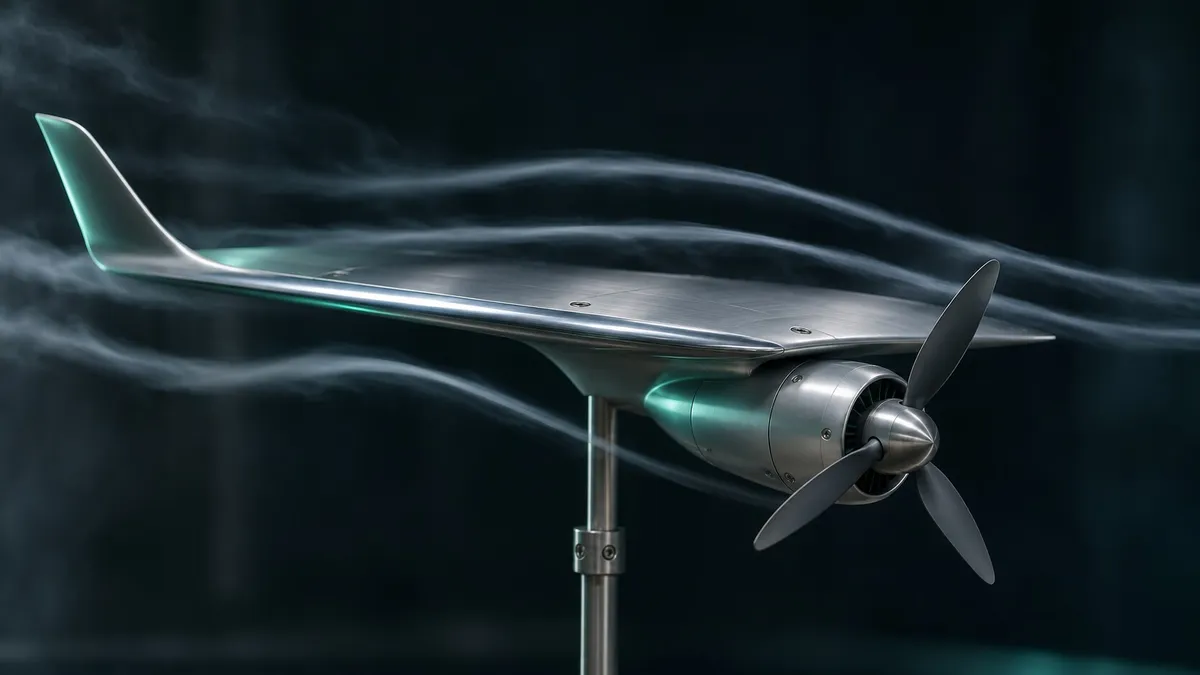
The first crew aboard COMAC’s electric regional plane had a short trip. On November 14, two pilots and a flight-test engineer took off from Binzhou in eastern China, covered about 60 kilometres and landed back at the same airport. They spent 16 minutes and 38 seconds in the air. The aircraft they were testing, the CE-25A, is designed to carry 19 passengers between cities. Flight report · Civil Aviation Administration of China
COMAC developed the aircraft with battery maker CATL, Shanghai Jiao Tong University and other partners. The prototype first flew without a crew in February. It had completed 19 uncrewed test flights before the three people boarded in Binzhou. China’s aviation regulator has accepted the manufacturer’s application to certify the design. Passenger service still requires approval. Chinese aviation regulator
What does 400 kilometres mean?
COMAC lists a range of 400 kilometres and a cruising speed of 300 kilometres per hour. The 60 kilometres flown on Saturday measured the length of a particular test. The public account gives neither the energy left in the battery at landing nor the distance the aircraft could have gone with all 19 seats occupied. An airline working out which towns it could connect would need to know both payload and usable range, with enough energy in reserve for a diversion. Reported flight figures · ICCT performance analysis
The number of seats tells you something about where electric flight might first matter. Using global airline data from 2019, the International Council on Clean Transportation found that commuter aircraft with up to 19 seats accounted for about four in every hundred departures. Their share of passenger-kilometres, which count each passenger and the distance they fly, was just 0.03 percent. Replacing even a substantial share of those flights would make a small dent in global aviation. For a passenger whose town depends on one of those departures, the service itself is the point. ICCT study
The return trip starts at the gate
A scheduled service adds another constraint. Once the aircraft lands, the airport has to get enough electricity into it before the next departure. Washington State’s electric-aircraft feasibility study identifies charging speed and the time available between flights as practical limits on regional service. For the CE-25A, a revealing future test would show how many people it carried, how far it flew with reserve power and how soon it was ready to take them home. Airport feasibility study
