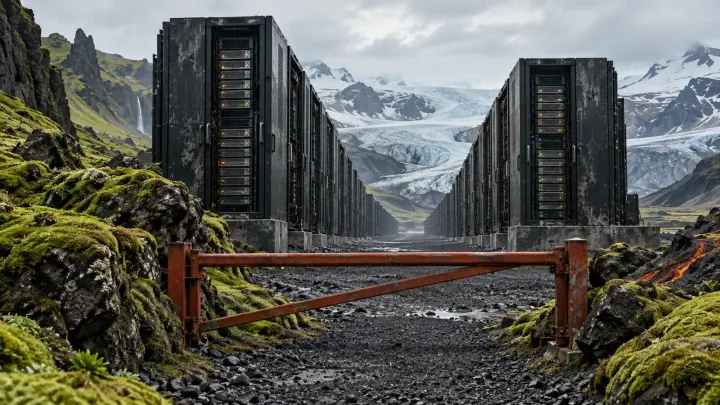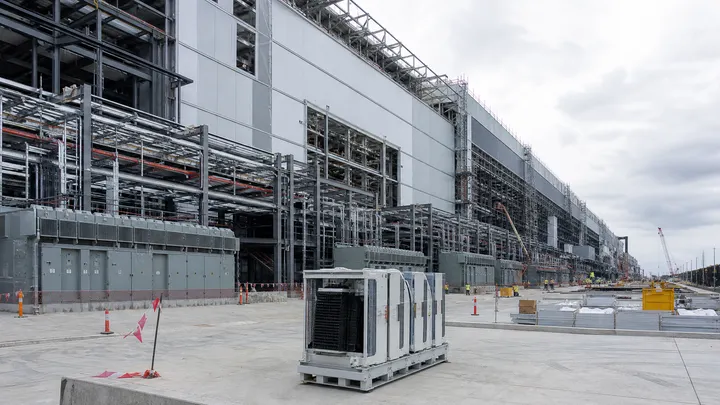
Compute is where AI stops being software magic and becomes physical infrastructure.
Models depend on chips, memory, data centers, power contracts, transformers, cooling, supply chains, and the companies that can coordinate all of it.
Vastkind covers compute as the control layer beneath AI: who can build it, who can afford it, who can power it, and who becomes dependent on it.
Start here
These pieces explain why compute is becoming strategic infrastructure.
- What Is Compute Infrastructure? Why Chips, Memory, Data Centers, and Power Now Shape AI is the foundation guide to the full AI compute stack, from chips and HBM to power, cooling, grids, and capital.
- AI Data Center Power: Fusion, Geothermal, and SMRs in the Race to Run AI gives the broadest entry point into the power problem behind AI.
- AI's Grid Bottleneck Is Transformers explains why boring electrical equipment can become a strategic constraint.
- High Bandwidth Memory: Why HBM Is Deciding the AI Supply War shows why memory, not only GPUs, can shape AI supply.
What changed recently
Compute is becoming harder to separate from energy, geopolitics, and vertical integration.
- Terafab and the AI Chip Empire: Why Musk Wants to Build the Whole Stack shows why the next AI race may reward companies that control more of the stack.
- AI Chip Sales Matter Because Compute Is Becoming Political Power links chip sales to state power, market access, and AI capability.
- Geothermal AI Power Play: Why Hot Rock Is Becoming Compute Infrastructure explains why firm clean power is becoming part of the AI buildout.
Essential reading
The compute layer decides which AI ambitions survive contact with power, capital, and supply.
- Enhanced Geothermal Systems: Why Firm Clean Power Could Become AI's Most Underrated Energy Bet
- Isaac GR00T: Why NVIDIA Is Building the Stack, Not Just the Robot Model
- ARC-AGI-2 Matters Because Intelligence That Burns Too Much Compute Does Not Scale
The deeper forces
Compute turns AI into a question of power in several meanings of the word.
- Physical power: electricity, grid capacity, substations, and transformers.
- Market power: who controls chips, memory, cloud capacity, and pricing.
- Political power: export controls, industrial policy, and national capability.
- Operational power: which companies can turn hardware into usable systems.
Read next
If you want the capability layer built on top of compute, go to AI.
If you want weekly orientation instead of a feed, get The Vastkind Briefing.