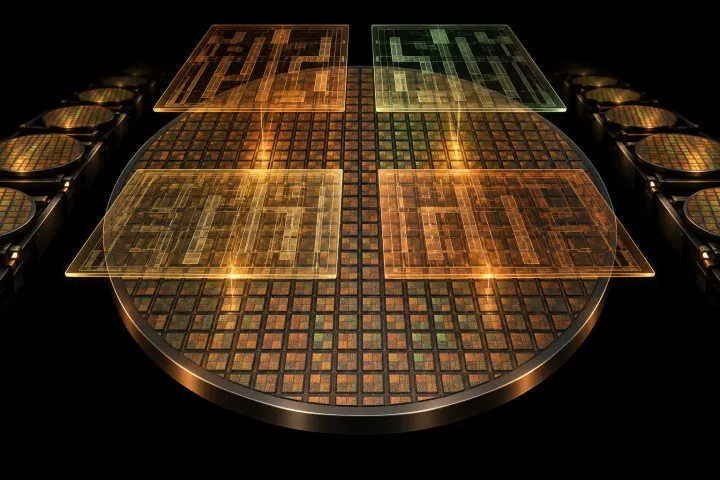
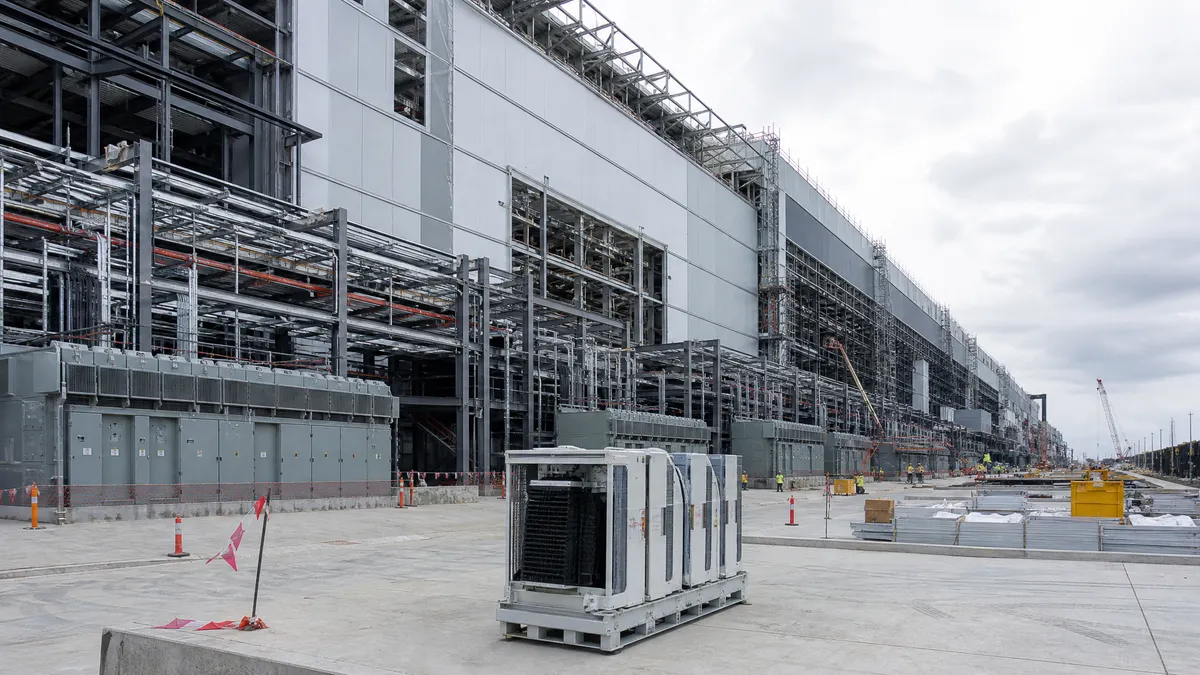
Terafab sounds like one more oversized Elon Musk announcement until you look at what it is actually trying to do. The reported plan is not just to make AI chips. It is to collapse chip design, fabrication, memory, advanced packaging, and testing into one vertically integrated system built around the needs of Tesla, SpaceX, and xAI.
That matters because the center of gravity in AI is shifting. For years, the dominant story was model size, benchmarks, and product launches. Now the harder truth is becoming impossible to ignore: AI progress depends on fabs, packaging, cooling, power, supply chains, and the ability to get physical hardware at scale. Terafab is a bet that the real bottleneck is no longer the model alone. It is industrial capacity.
If Musk is serious, Terafab is not mainly a semiconductor story. It is an infrastructure sovereignty story about who gets to control the most important input in the AI era.
What Terafab Is Supposed to Be
According to public reporting and Terafab's own messaging, the project aims to build a massive chip-making system tied to the needs of Tesla, SpaceX, and xAI. The broad ambition is easy to summarize: stop depending so heavily on outside suppliers and bring more of the AI hardware stack under one roof.
The reported Texas prototype facility is framed as an "advanced technology fabrication" site designed to iterate faster than a normal fab workflow. In plain English, the pitch is speed and control. Instead of sending wafers, masks, packaging, and testing work across a fragmented network, Terafab wants a tighter loop where chips can be designed, made, tested, revised, and pushed back into production with less friction.
That sounds dry, but it is the real point. AI hardware is no longer just about having access to GPUs. It is about controlling every delay between idea and deployment.
Musk's industrial logic is also broader than a data center play. Tesla needs chips for vehicles and Optimus. xAI needs training and inference hardware. SpaceX has its own communications, orbital systems, and long-horizon ambitions. Terafab only makes sense if you see these not as separate companies with separate needs, but as parts of one compute-hungry ecosystem.
Why This Is Happening Now
The obvious answer is AI demand. The better answer is dependency anxiety.
The modern AI stack already depends on a narrow set of choke points: advanced foundries, high bandwidth memory, advanced packaging, power infrastructure, and the logistics needed to coordinate all of them. We have already seen how quickly the conversation moves from software excitement to physical scarcity in stories about AI chip sales, high bandwidth memory, and AI data center power.
Terafab is what that pressure looks like when a company decides the answer is not better procurement, but industrial self-defense.
That is the part worth taking seriously. If the companies building cars, humanoid robots, large models, satellite networks, and future autonomous systems think external chip supply will become a strategic vulnerability, they will not just compete for supply. They will try to own more of the stack.
This is how a software boom turns into a manufacturing arms race.
The Real Thesis: AI Is Becoming Heavy Industry
For most people, AI still feels like a cloud service. You type into a box, a model answers, and the machinery stays invisible. Terafab points in the opposite direction. It makes the machinery visible again.
A project like this says that advanced AI is not merely a research contest or a product contest. It is an industrial contest. The winners may not be the ones with the cleverest chatbot interface. They may be the ones that can secure wafers, memory, packaging, power, and fabrication know-how fast enough to keep their systems scaling while everyone else rents access.
That shift changes how we should think about the future of AI.
It means compute is not just a utility. It is becoming a strategic asset.
It means the distance between AI and old-school industrial policy is collapsing.
It means the future of robotics, autonomy, and scientific systems may be shaped as much by foundry capacity as by algorithmic novelty. That is especially relevant if Tesla wants chips not just for model training but for edge inference inside vehicles and robots. In that world, the AI future touches the physical world at every level, which is also why the robotics side of this story belongs next to pieces like Robots Reimagined.
Why Vertical Integration Looks So Attractive
Terafab is extreme, but the underlying instinct is rational.
When a technology stack becomes strategically important, companies stop wanting mere supplier relationships. They want leverage, speed, resilience, and insulation from bottlenecks. Vertical integration promises all four.
If more of the process lives in one system, you can:
- shorten iteration loops
- reduce supplier exposure
- tune hardware for your exact workloads
- coordinate design decisions across chips, memory, packaging, and deployment targets
- keep competitors from dictating your growth rate
This is especially powerful in AI because the performance gains are no longer coming from one layer alone. Model architecture matters. So do interconnects, memory bandwidth, packaging, thermal constraints, and power envelopes. If you control more of the system, you can optimize across layers instead of taking whatever the market gives you.
That is the seductive part of Terafab.
The dangerous part is that vertical integration at this scale can also become a story of concentration, lock-in, and industrial overreach.
The Risks Are Not Small
Terafab is easy to admire at the level of ambition and easy to doubt at the level of execution.
Chip fabrication is one of the hardest industrial activities on Earth. It is brutally expensive, unforgiving, globally entangled, and dependent on talent, tooling, chemistry, cleanroom discipline, packaging, and yield management. The gap between announcing a fab and operating one at world-class scale is enormous.
There is also a credibility problem here. Musk projects often mix real strategic insight with theatrical scale, timeline compression, and marketing myth. That does not mean Terafab is fake. It means readers should not confuse strategic importance with execution certainty.
Even if the logic is sound, the likely path is messy:
- delays
- cost blowouts
- dependence on outside process expertise
- political scrutiny
- local infrastructure strain
- eventual compromises on what truly gets brought in-house
And if Terafab works, that creates a different problem. It would deepen the concentration of compute power inside a small number of private systems that already sit at the intersection of transportation, communications, AI, and automation.
That is not just a business story. It is a governance story.
Why This Matters
Terafab matters because it makes a hidden truth about AI hard to ignore: the future of intelligence will be shaped by physical infrastructure, not just software talent. If advanced chips become the decisive bottleneck, then the companies that control fabrication, packaging, and power gain outsized influence over what kinds of AI get built and who can deploy them. That pushes AI closer to geopolitics, industrial policy, and monopoly risk. It also means the future of autonomy, robotics, and scientific systems may depend less on who has the best demo today and more on who can actually manufacture tomorrow.
The Bigger Signal
The strongest way to read Terafab is not as a single company project, but as an early sign of a broader turn.
AI is maturing out of its illusion of weightlessness.
The next phase will be defined by physical constraints and physical control. Chips. Memory. Packaging. Energy. Cooling. Transmission. Land. Water. Labor. Permitting. Supply chains. Those are not side issues anymore. They are the substrate.
So the real question is not whether Terafab becomes exactly what Musk promises. The real question is whether more of the AI economy starts copying the same logic.
I think it will.
Not every company will try to build its own fab. That would be absurd. But more companies will try to secure tighter control over the hardware path that determines their future. Some will do it through partnerships. Some through custom silicon. Some through data center verticalization. Some through energy strategy. Some through geopolitical lobbying.
Terafab is the loudest version of a quieter truth: the AI race is turning into a control race over the industrial base beneath computation.
That is why this story matters even if Terafab never fully becomes the giant machine its backers imagine.
Because the instinct behind it is real.
CTA: Read next: AI Chip Sales: Why Surging Revenue Does Not Mean the AI Buildout Is Safe, High Bandwidth Memory: Why HBM Is Deciding the AI Supply War, and AI Data Center Power: Fusion, Geothermal, and SMRs in the Race to Run AI
Read next: For the full compute stack, go to Vastkind's Compute hub, then read why compute is becoming political power and why grid hardware can constrain AI deployment.