
TeraWulf has doubled the power contracted for its Muskie data campus in eastern Kentucky to 1 gigawatt. The agreement is a real development milestone. It is not a gigawatt of running AI infrastructure: the new transmission connection still needs routes, approvals and construction.
The distinction is unusually concrete here. A company filing sets out the larger power agreement; a utility notice shows the physical work that must connect it to an existing grid. Reading them together makes clear what advanced and what remains a plan.
The deal moves one phase forward
In a Form 8-K disclosed on October 5, TeraWulf says amended agreements with Kentucky Power raise Muskie's contracted capacity from 500 megawatts to 1 GW. The documents were signed October 1, not the day of the announcement.
The first 500-MW phase remains targeted to begin ramping in 2028. The second moves from 2030 to 2029, subject to Kentucky Public Service Commission approval and the utility's construction schedule. An earlier target matters to anyone planning a campus around a power-delivery date. It is still a target, not delivered capacity.
Nor does one gigawatt specify how much computing work the site will perform. It is a measure of power capacity, not annual electricity consumption, installed server count or utilization. Those require evidence about the equipment and its operation. TeraWulf's project announcement describes phased AI and high-performance computing development, not an already operating workload of that scale.
The missing link has a construction schedule
Kentucky Power's October 2 transmission notice proposes a new 765-kilovolt Venator substation, two 765-kV lines totaling about 2.5 miles to reach an existing transmission line, and two 345-kV lines totaling about 6 miles.
This is an extension and connection project, not a claim that the region has no grid. Its routes have not yet been selected. The utility is seeking community input, with an October 15 open house and feedback requested by October 29.
The notice anticipates a regulatory decision in spring 2027, transmission-line construction beginning that November and the facilities entering service in October 2028. The schedule can change. These dates describe the proposed connection; they do not establish that every megawatt of the campus will be in use at once.
That is the useful reality check on a large capacity announcement. A signed power agreement can improve a project's prospects while a separate set of physical milestones still determines when it can run.
Household benefits are proposed, too
The public bargain also needs to move from announcement to approved terms. In its October 5 account of the amended deal, Kentucky Power says it expects $100 million in TeraWulf-funded winter bill credits for residential customers over the contract's first 10 years, beginning in 2029, if regulators approve it.
The utility also says TeraWulf agreed to pay the estimated financing costs of its planned 760-MW Big Sandy combined-cycle generation facility, alongside applicable service charges. Financing costs are not the plant's entire construction cost. The announcement does not establish that this one plant would supply Muskie's whole contracted gigawatt.
These are specific commitments worth examining, not demonstrated net savings on future bills. Kentucky Power says it plans to file the amended contract and seek approvals later this year. Its account and TeraWulf's are statements by the parties to the deal, not independent findings that customers are fully protected.
For the broader question of who bears the risk when a large electricity customer grows, shrinks or leaves, see our explanation of data-center power costs.
The next useful Muskie update is a filing, a decision, an agreed route or energized capacity. Each would close a different gap between a credible development plan and a working campus. Another repetition of the gigawatt number would not.
More reporting on the systems behind AI: Compute.
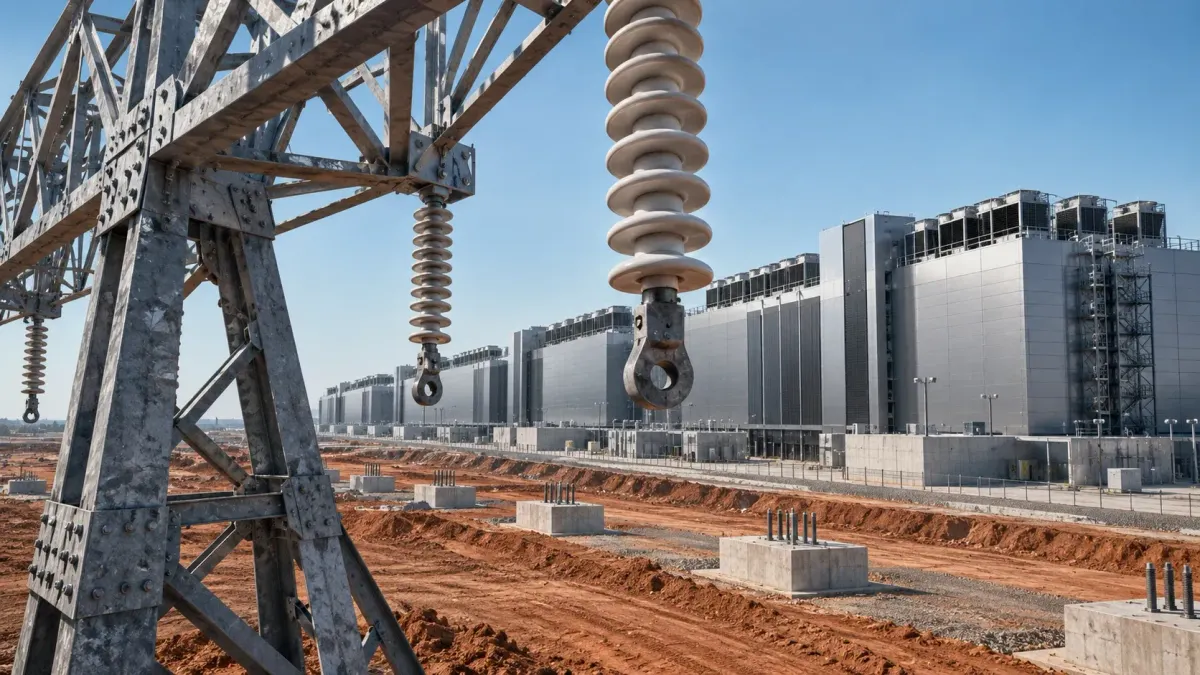
Production note: Vastkind compared TeraWulf's October 5 filing and announcement with Kentucky Power's October 2 transmission notice and October 5 agreement summary. We did not inspect the site, review the full amended contract or independently model customer bills. The image is a conceptual AI-generated illustration, not a depiction of Muskie's actual site or planned routes.