The least interesting thing about AI video right now is that some of the clips finally look good.
That matters, but only up to a point.
The deeper shift is that generative video is moving from ideation and previs into selective final production. Once that happens, the question stops being “is this a cool demo?” and becomes “which shots enter the pipeline this way, who gets displaced or empowered, and what new controls have to exist around consent, licensing, and provenance?”
That is the real Hollywood story.
AI video is not changing film first as pure art. It is changing it first as workflow.
The threshold is not imagination. It is pipeline entry.
For years, generative video sat in a familiar zone: mood boards, concept fragments, pitch aesthetics, speculative reels, and “look what the model can do now” showcases.
Useful, maybe. Operational, not really.
That boundary is now weakening.
The moment AI-generated video can credibly handle selected production tasks — previs, inserts, transitions, destruction beats, background plates, certain VFX classes, or other carefully chosen shots — it becomes something more serious than a novelty. It becomes a routing decision inside production.
That matters because production decisions scale differently than demos do. A workflow change travels through budgets, schedules, staffing, vendor selection, contract language, and audience expectations.
This is the point at which synthetic video starts behaving less like a media curiosity and more like an industrial tool.
Shot economics are where the real disruption starts
Hollywood rarely changes because someone proves a technology is artistically possible.
It changes when the economics of a particular class of work shift hard enough that producers can no longer ignore them.
That is why selective final-pixel use matters.
If a narrow set of shots can be produced much faster or cheaper with acceptable visual quality and manageable continuity risk, then producers have a new incentive structure. They start triaging sequences by cost, believability, and downstream cleanup burden. Some scenes stay traditional. Others get routed through generative systems. A new layer of decision-making appears between intent and execution.
This is how disruption usually enters conservative industries: not as total replacement, but as a wedge in specific cost-sensitive parts of the workflow.
Once the wedge holds, the system reorganizes around it.
The labor story is not “artists disappear.” It is “job boundaries move.”
A lot of discussion around AI video gets stuck between two weak positions.
One says this is mostly a creative toy that empowers everyone.
The other says filmmaking labor is about to vanish.
Neither is sharp enough.
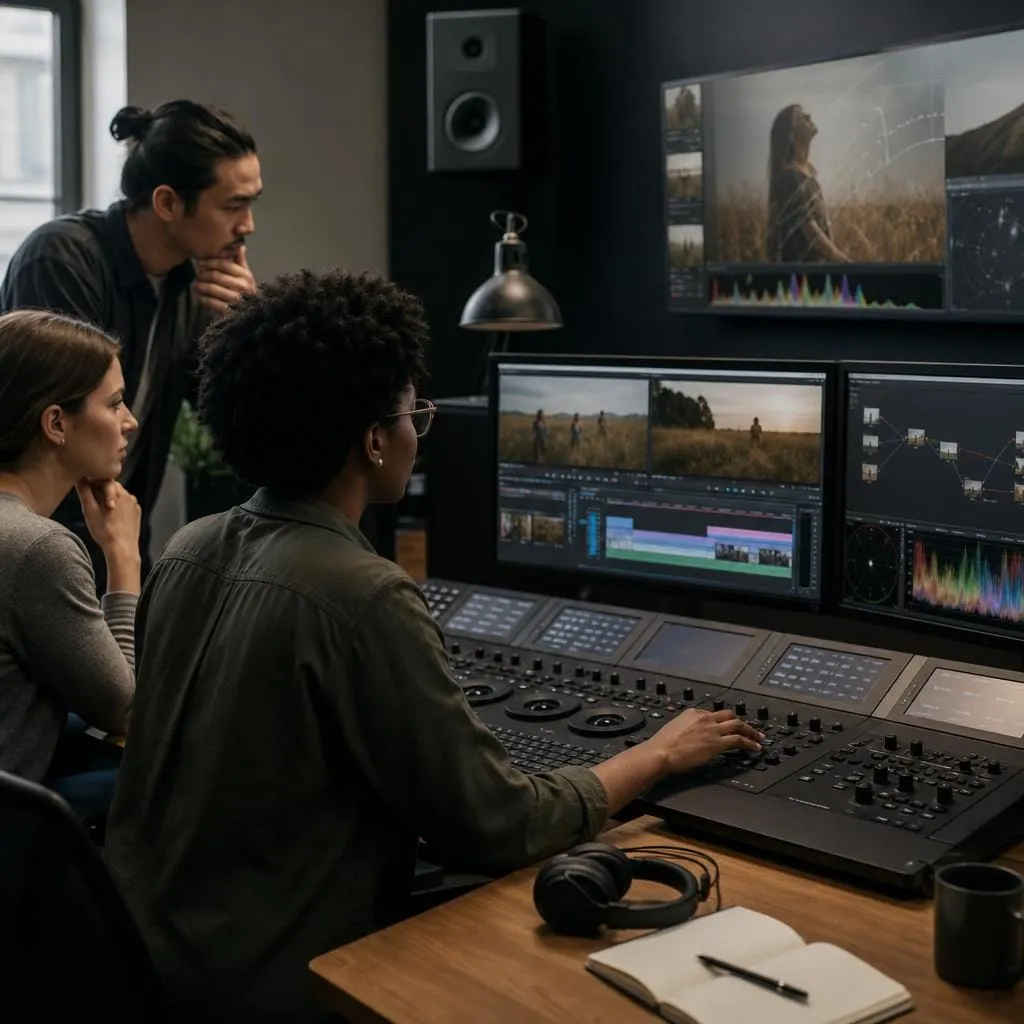
The more realistic story is that job boundaries move first. Some forms of VFX work compress. Some editing and previs tasks shift toward supervision and curation. Some departments gain leverage if they become fluent in model control, cleanup, continuity management, shot selection, or prompt-to-plate workflow design. Smaller teams may suddenly do work that previously required more headcount, more time, or a larger vendor chain.
That is real empowerment for some people.
It is also real compression for others.
The critical point is that AI video does not just add a tool. It changes where value sits in the pipeline.
When that happens, labor questions become structural, not sentimental.
Consent, likeness, and licensing are now production infrastructure
This is the part many excited tool discussions still underweight.
Once generative video enters real workflows, legal and ethical questions stop being after-the-fact headaches. They become upstream production requirements.
Actors’ likeness rights, voice replication, training-data provenance, union disclosure rules, asset ownership, and platform labeling are no longer peripheral concerns. They are part of the machine room.
That matters because trust in synthetic media does not collapse only when the model fails visually.
It collapses when creators, performers, platforms, or audiences no longer believe the process around the output is legitimate.
This is why consent flows, licensed data, end-to-end provenance, and disclosure rules are not bureaucratic drag. They are part of the cost of making AI video socially usable.
The same synthetic-media ecosystem that enables efficient production also expands the surface area for abuse, cheapfakes, and confusion. If the pipeline gains power without gaining discipline, the backlash will be earned.
For the broader civic side of that trust problem, see Deepfakes and Democracy: The Real Crisis Is That Proof Itself Is Getting Weaker.
Platforms will decide how far this spreads
Studios matter, but platforms matter just as much.
Labeling rules, monetization policies, provenance expectations, and enforcement against deceptive synthetic content all shape whether AI video becomes normalized as a legitimate production layer or dissolves into a swamp of cheap synthetic sludge.
That makes distribution infrastructure part of the creative story.
The market will not be governed only by what tools can generate. It will be governed by what platforms allow, what audiences tolerate, and how much ambiguity the ecosystem can absorb before trust starts leaking out of every surface.
This is why AI video is not just a filmmaking issue.
It is a media-governance issue.
Why This Matters
AI video matters because it is crossing from fascinating output into routinized production choice. That is where budgets, labor, authorship, and trust begin to change in durable ways. The real issue is not whether a model can make a convincing shot. It is whether the systems around that shot — consent, licensing, job design, provenance, and platform rules — are strong enough to support scaled use without hollowing out the human and institutional layers that make media credible.
Conclusion
The headline story is that AI video is getting better.
The more important story is that it is getting operational.
That is a much bigger change.
Hollywood is not being “broken open” mainly by prettier synthetic clips. It is being pressured to redesign parts of its workflow around a new class of production decision.
That means the future of AI video will be shaped less by spectacle than by systems: who controls the pipeline, who gets paid, whose consent is required, and which outputs audiences are still willing to trust.
That is where the real fight is.
CTA: Read next: AI and Jobs 2025: Productivity Is Rising, but the Career Ladder Is Shrinking and Deepfakes and Democracy: The Real Crisis Is That Proof Itself Is Getting Weaker