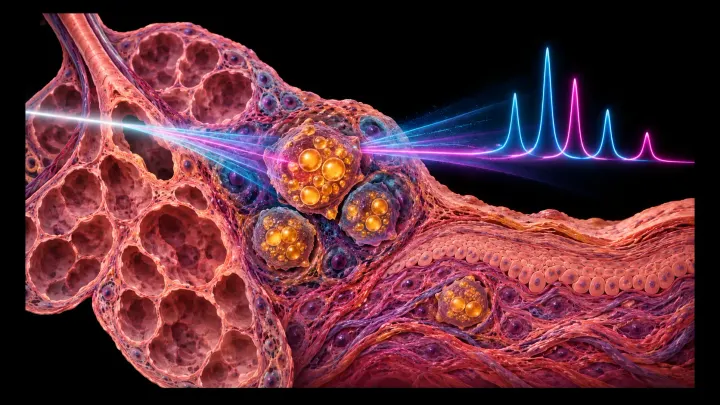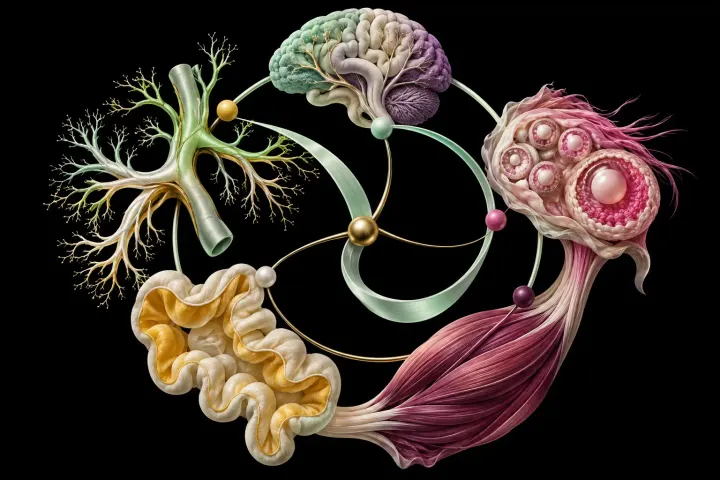

Klotho makes for dangerous headlines.
A protein linked to longevity. Multi-organ effects. Strong mouse data. A one-time gene-transfer setup. Add a little narrative inflation and suddenly the story becomes irresistible: one shot, slower aging, a new biological era.
That is exactly where the field needs more discipline.
Klotho is genuinely interesting. It touches phosphate balance, metabolic signaling, inflammation, oxidative stress, and tissue resilience. In mice, altering Klotho biology has produced some of the most attention-grabbing aging signals in the literature. That is enough to deserve serious attention.
It is not enough to justify the idea that aging has been redefined by a single intervention.
The real value of Klotho now is different. It is becoming a stress test for whether longevity can move from broad mechanistic promise into the much harsher world of gene-therapy translation.
Why Klotho gets so much attention
Klotho has attracted the field for good reason.
As a membrane-bound co-receptor and soluble signaling factor, it sits at an unusually interesting intersection of pathways associated with aging biology. The target appeals to researchers because it seems capable of producing systemic effects rather than narrow, single-tissue changes. That creates a rare kind of longevity excitement: not just the possibility of helping one organ system, but the possibility of changing the quality of aging across multiple systems at once.
That is the seductive part.
The more serious part is that a biologically elegant target still has to survive delivery, durability, dose control, immune response, and endpoint logic once you try to turn it into medicine.
The mouse data is interesting — and still not the thing people want it to be
The preclinical case for Klotho is strong enough to pay attention to.
Mouse work has suggested meaningful effects on lifespan, muscle function, bone resilience, inflammation, and tissue maintenance. That kind of multi-organ signal is exactly why the field keeps circling back to it. It hints at something broader than a narrow disease-modifying therapy.
But this is also where longevity repeatedly gets itself into trouble.
A broad mouse signal is not a human therapeutic reality. It does not tell you whether the effect size will translate, whether the risk profile stays acceptable, whether the delivery system behaves consistently at scale, or whether the apparent benefit can survive more complex human biology and longer follow-up.
In longevity, the jump from “compelling in mice” to “credible in humans” is where many beautiful stories get brutally smaller.
Klotho is not exempt from that pattern.
The real bottlenecks are gene-therapy bottlenecks
This is why Klotho is more useful as a translation case study than as a myth.
Once you package a longevity target into gene-therapy form, the hard questions stop being rhetorical and become operational.
How do you deliver it cleanly?
Which vector or non-viral system gives you enough expression without introducing the wrong immune or safety burden?
How durable should expression be?
Can you re-dose if efficacy fades or immunity appears?
How do you balance systemic exposure with tissue targeting?
How do you manufacture at a scale that makes the therapy more than a boutique experiment?
These are not side questions. They are the entire game.
A longevity candidate can look extraordinary on paper and still die on manufacturing complexity, vector constraints, immune response, or the sheer difficulty of controlling a systemic intervention tightly enough for regulators and clinicians to trust it.
That is why Klotho should be read in the same breath as gene-therapy infrastructure, not just geroscience ambition.
Human translation will be harder to interpret than the hype suggests
Even when Klotho reaches human testing, the evidence problem will stay messy.
What counts as success for a longevity-oriented gene therapy?
A biomarker shift? Better muscle function? Slower frailty progression? Organ-specific benefit? Reduced inflammation? A composite endpoint? Some mixture of all of them?
The answer matters because “aging” is still a broad narrative category, while medicine and regulation still prefer tighter, condition-linked proof.
That creates a structural tension. The public story wants Klotho to be anti-aging in the largest sense. The clinical system will likely need to evaluate it through narrower, more interpretable pathways.
This is one reason hype around planned programs and early access should be treated carefully. A future trial, a sponsored pathway, or a manufacturing milestone is not the same thing as robust human evidence. It may indicate momentum. It does not settle efficacy.
This is also an access story
The more advanced longevity becomes, the more it starts to inherit the access politics of frontier medicine.
If Klotho-based approaches move into human experimentation through private programs, specialized clinics, or geographically selective pathways, then the field will again face an old problem in a new form: the people closest to the frontier are not necessarily the people with the clearest need, but the people with the most money, information, and tolerance for uncertainty.
That matters because the social meaning of longevity changes once therapies stop being supplements and start becoming high-complexity interventions.
At that point, the question is no longer just “does it work?”
It is also “who gets to try, who gets protected from weak evidence, and who gets left outside the gate?”
Why This Matters
Klotho matters because it compresses many of longevity’s central tensions into one candidate. It has strong mechanistic appeal, striking preclinical breadth, real translational ambition, and all the usual gene-therapy burdens waiting on the other side of the mouse data. That makes it more than a promising molecule. It makes it a test of whether longevity can grow up into disciplined therapeutic development without selling every powerful signal as an imminent human breakthrough.
Conclusion
The wrong way to read Klotho is as proof that one shot may soon redefine aging.
The better way is more sober.
Klotho is a biologically exciting target entering a brutally demanding translational environment. If it succeeds, it will not be because the narrative was beautiful. It will be because delivery, safety, manufacturing, and evidence all held together long enough to make the story true.
That is a much harder standard.
It is also the only one that matters.
CTA: Read next: Longevity 2030 Will Be Defined by Partial Wins, Not an Anti-Aging Revolution and Longevity 2026: Why the Field Is Finally Facing Clinical Reality