


Blood from a 101-year-old donor is an unlikely starting point for making young-looking nervous-system cells. Yet researchers in Bonn used it to grow neural stem cells whose molecular aging signatures had largely faded. Across the study, the resulting stem-cell cultures could produce neurons and supporting cell types.
The striking part is not simply that the cells registered as younger. It is that the reset happened slowly enough to investigate while it unfolded. That could give scientists a better way to ask one of aging biology's hardest questions: which changes actually make a cell younger, and which merely accompany its transformation into something else?
The peer-reviewed study in Aging Cell, led by Lea Jessica Berg and Oliver Brüstle with colleagues in Bonn and Aachen, followed human cells in laboratory cultures. It did not rejuvenate a person. Its contribution is an experimental window into a process that researchers would eventually like to control.
The paper appeared online on October 3, 2026, followed by the University of Bonn's announcement on October 9. The “60 years younger” headline circulating later in October describes this earlier work.
The Cells Changed Jobs, Not Just Their Age
The researchers began with precursors of red blood cells, not the mature red cells that carry oxygen around the body. Mature human red blood cells have lost their nuclei. Their immature precursors still contain the DNA and gene-control machinery that can be redirected.
The team used two proteins, SOX2 and cMYC, to push these precursors toward a different identity. These are transcription factors: proteins that help determine which genetic instructions a cell uses. In suitable culture conditions, they helped replace a blood-cell program with a neural stem-cell program.
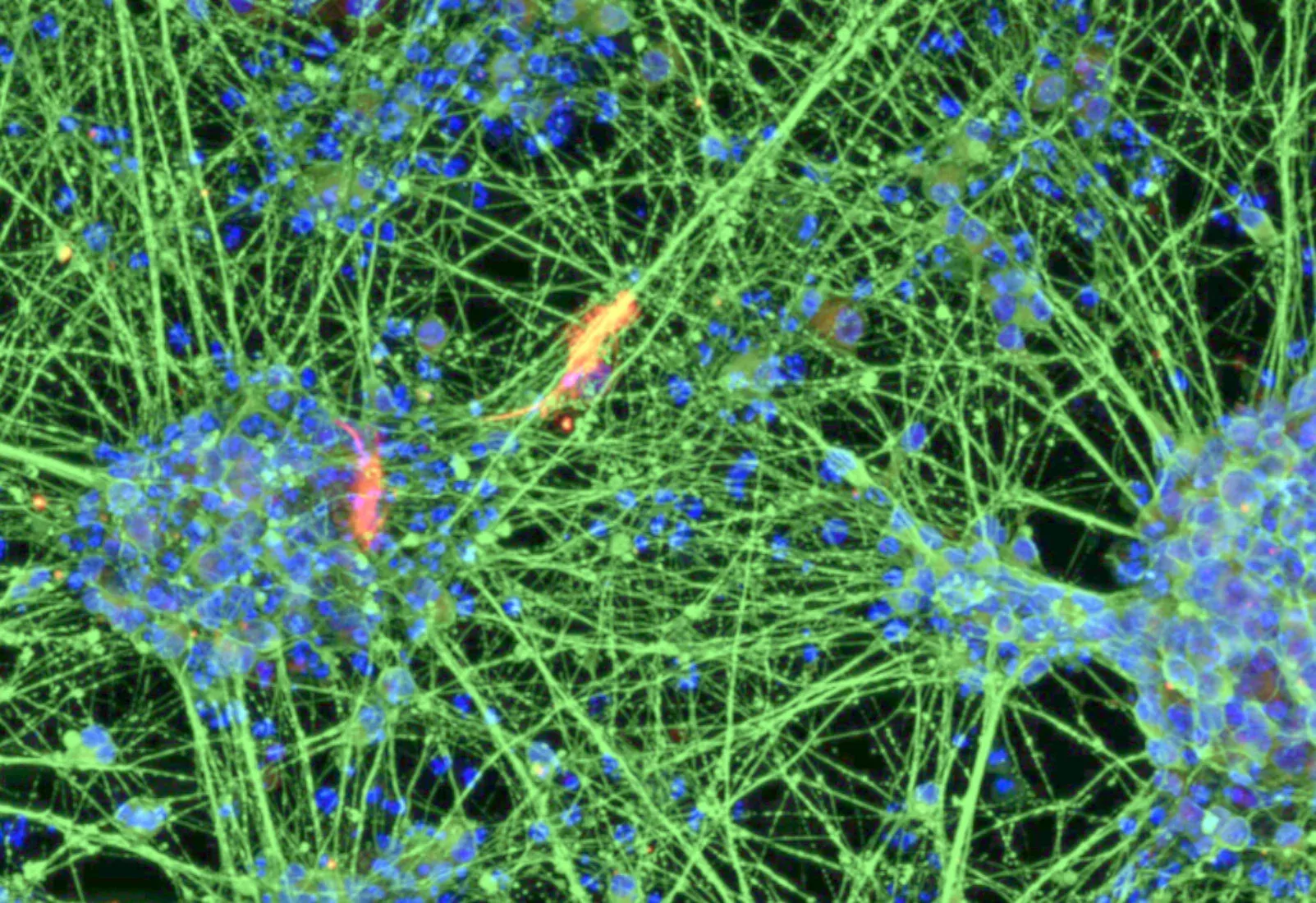
Neural stem cells are useful because they can multiply and generate several nervous-system cell types. In this study, the resulting cells could produce neurons, astrocytes and oligodendrocytes. Neurons transmit signals; the other two cell types support and maintain the nervous system.
There is a longer-established route to such cells. Researchers can first turn a specialized cell into an induced pluripotent stem cell, or iPSC, a broadly flexible state from which many cell types can be made. They then guide it toward a neural identity. The Bonn approach goes directly toward neural stem cells without deliberately creating that pluripotent intermediate.
That distinction matters, but it is not a new discovery that direct conversion can reset aging marks. The same group reported blood-derived neural stem cells with epigenetic rejuvenation in 2018. The new study examines how the transformation develops over time.
Nor is this the same as making an old blood cell youthful while keeping its original job. Here, changing the job is part of the experiment. That is an important difference from partial reprogramming, which tries to obtain rejuvenating effects while preserving or recovering the cell's original identity.
What “60 Years Younger” Actually Measures
To estimate age, the team used an epigenetic clock. It reads patterns of DNA methylation, chemical marks attached to DNA, and converts them into an age estimate. These marks do not rewrite the sequence of the DNA itself. Their patterns change with development, cell identity and aging.
The specific model was the skin-and-blood clock published by Steve Horvath and colleagues in 2018. A lower result means the sampled methylation pattern looks younger according to that model. It does not mean every component of the cell has been restored by the same number of years.
Across the Bonn study, early established neural stem-cell cultures had clock estimates averaging about 13% of their donors' chronological age. After more rounds of culture, the reported value fell to roughly 5%. Those percentages describe the model's age estimates, not the proportion of all cellular damage removed.
The university's announcement illustrates the effect as cells from an 80-year-old acquiring a molecular age below 20. This is a press-summary example, not an exact donor/result pair reported in the study. The underlying finding is a large fall in estimated epigenetic age.
There is also a more consequential complication. The experiment changes the kind of cell being measured. The clock can estimate neural tissue as systematically younger than its chronological age, and the researchers lacked a reference population of genuinely old neural stem cells for a clean comparison. Some of the apparent age difference could therefore reflect the shift from blood toward neural identity.
The authors explicitly acknowledge this. It does not make the result meaningless; it limits how literally the headline's number can be read. A large, trackable change in aging-associated marks is real experimental information. “Sixty human years of aging have been undone” is a broader claim.
For the distinction between a useful marker and a complete biological verdict, Vastkind's guide to epigenetic clocks explains what these measurements can and cannot establish.
The Slow Reset Is the New Finding
The study included cells from 15 donors, ranging from newborns to a 101-year-old. Not every experiment used all 15. The detailed clock time course followed cells from three donors aged 50, 87 and 101, while other comparisons used different subsets.
Within about 12 days, the converting cells were expressing markers associated with neural stem cells. To an observer looking at cell shape and a few identifying proteins, the new identity was already becoming recognizable.
Underneath that appearance, however, the remodeling continued. Broader DNA-methylation and gene-activity patterns were still changing well beyond the first two weeks. The new identity was not finished simply because its early markers had appeared.
Most of the measured age-associated methylation reset took around 50 days. The researchers followed the longer trajectory for more than 100 days. Rather than an instant switch, they saw an extended transition in which cellular identity and age-associated signals changed on overlapping timelines.
Slow can be an advantage here. A rapid reset offers a dramatic before-and-after comparison but less room to examine intermediate stages. A process spread across weeks gives researchers more opportunities to sample cells, alter conditions and ask which events come first.
That is the practical promise: a more accessible model for investigating the machinery of rejuvenation.
The Clock Kept Moving When Cell Division Slowed
One explanation the team tested was straightforward: perhaps the apparent rejuvenation depended on the cells continuing to divide.
That was plausible because both pluripotent stem cells and neural stem cells can multiply, whereas mature neurons generally do not. Earlier work had also shown that directly converted mature neurons could retain their source cells' aging signatures. Cell division looked like a possible dividing line between the two outcomes.
The Bonn team tested this in cultures from three older donors. They used two different ways to restrict proliferation and tracked both the cultures' expansion and their estimated epigenetic age.
The cultures accumulated fewer cell divisions, but the decline in estimated age continued. Neither treatment produced a statistically significant difference in the age readout compared with the untreated cultures. In another experiment, the researchers pushed early neural stem cells toward neurons; the clock decline continued there too.
Those results weaken the idea that sustained rapid division alone explains the reset. They do not prove that cell division never matters, or that the treated and untreated cells were identical in every relevant respect. The groups were small, and an experiment that finds no significant difference is not a guarantee of equivalence.
Still, this is a useful narrowing of the problem. The researchers can now look more closely at other processes activated during conversion instead of treating cell multiplication as a sufficient explanation. The study does not yet isolate the factor that causes the age-associated changes.
The Evidence Goes Beyond a Clock Reading
The researchers did not stop at a methylation score. In established cultures from donors of different ages, they examined selected cellular features associated with aging and compared them with neural stem cells made through the iPSC route from the same donors.
These checks included proteins associated with the nuclear envelope, indicators of cellular waste recycling, DNA-damage signals and the production of reactive oxygen species by mitochondria, the cell's energy-producing structures. On these measurements, the directly converted cells broadly resembled the comparatively youthful iPSC-derived cells, including when the original donor was very old.
Gene-activity differences between cells from young and old donors also became much smaller during conversion. But the young comparison group contained only three newborn donors, and the change in cell identity was substantial enough to obscure smaller age-related differences. The authors flag both issues.
Together, the additional tests support the interpretation that the cells underwent biological remodeling beyond a solitary algorithmic score. They do not amount to an exhaustive restoration of cellular function.
Other uncertainties remain inside the culture system. Oxygen conditions changed during the process and could have contributed to the result. Measurements across whole cultures cannot fully reveal whether all cells reset similarly or whether particular groups of related cells reset faster and came to dominate.
The route itself also deserves precise wording. Available evidence argues against a fully pluripotent intermediate, but it does not rule out every brief, partially reprogrammed state. The authors say finer time-course studies at single-cell resolution would help establish how individual cells move through the transition.
Why Young Cells Can Be a Problem for Brain Research
Making cells younger sounds like an obvious advantage. For studying diseases of an aging brain, it can create a problem.
Suppose researchers want to understand why a person's neurons become vulnerable late in life. They can take accessible cells from that person and convert them into nervous-system cells in the laboratory. But if the conversion erases much of the aging signature, they may also erase part of what they hoped to investigate.
Independent research shows that the outcome depends on the route. A 2016 eLife study converted human skin cells directly into neurons and found that several age-associated features were retained, including epigenetic age. Those were mature neurons, not the expandable neural stem cells produced in Bonn.
The distinction gives researchers different tools for different questions. Preserving aging traits can help them model late-life vulnerability. Resetting those traits can help them investigate which features disappear and which mechanisms might be responsible. Neither outcome is automatically better for every experiment.
The Bonn system could be especially useful for comparing stages along that transition and testing what speeds or slows particular changes. But harvesting a culture at an earlier day is not yet a validated way to order up a functioning neuron of any desired biological age. Cell identity and age-related measurements are still changing together.
There is encouraging evidence that this cell source can produce working neurons. In a separate 2024 study, the Bonn group transplanted blood-derived neural stem cells into adult mouse brains. Neurons that developed from them showed electrical activity and evidence of connections with the host's cells.
Those were uninjured mouse brains, not a trial demonstrating recovery from Alzheimer's disease. The experiment supports the usefulness of the cell source and the possibility of integration. It does not establish that replacing cells will restore a patient's damaged brain network.
From a Cell Model to a Useful Treatment
The central challenge for rejuvenation medicine is to improve useful function without losing the identity and organization that make a tissue work. A blood precursor can change jobs in a dish. A neuron inside a person's brain belongs to a network whose connections matter.
That is one reason partial reprogramming attracts interest. Instead of taking a cell all the way into a different identity, researchers try to interrupt the process after obtaining beneficial changes. A 2022 eLife study showed that temporarily reprogrammed human skin cells could regain their original identity while retaining younger molecular signatures. Its functional results were not uniform, and it too was a small laboratory study, not a treatment that rejuvenated human skin.
Bonn's work approaches the problem from another direction: deliberately make a new cell type, then use the extended transition to study how identity and aging marks change. The two approaches share questions, but they are not interchangeable treatments.
To move beyond this model, researchers need to establish which changes cause improved cellular performance, how durable those improvements are and whether they can be obtained without unwanted growth or loss of function. Any proposed transplantation or in-body intervention would then need its own safety and efficacy evidence. This paper cannot provide a credible countdown to such a therapy.
That clinical distinction is the larger question in longevity science: whether changing aging-related biology can preserve abilities and health, not simply move a laboratory marker.
The exciting advance here is more specific. An old donor's cells can enter a new state, and the journey is slow enough to examine as it unfolds. The lower age reading draws attention; the ability to study how it arises is what could make this experiment useful.
Sources and Further Reading
- Berg et al., Aging Cell (2026): Original blood-to-neural-stem-cell study and supplementary data
- University of Bonn (October 9, 2026): Institutional announcement and the 80-to-under-20 example
- Sheng et al., Nature Communications (2018): Earlier direct blood-cell conversion and epigenetic rejuvenation
- Horvath et al., Aging (2018): The skin-and-blood epigenetic clock and its tissue-dependent estimates
- Huh et al., eLife (2016): Age retention in directly converted human neurons
- Berg et al., Stem Cell Research & Therapy (2024): Functional integration in adult mouse brains
- Gill et al., eLife (2022): Transient reprogramming of human skin cells
