
Longevity science is not the search for a magic anti-aging switch.
It is the study of how aging changes cells, tissues, organs, immune function, repair systems, metabolism, and disease risk over time. The serious version asks a hard question: can any intervention slow, prevent, or reverse parts of that process in a way that helps humans stay healthier for longer?
The easy story says longevity is either a coming revolution or a rich-person fantasy. Both readings are too shallow. The harder truth is that aging biology is real, the commercial claims are often ahead of the evidence, and the proof standard is much stricter than most coverage admits.
Longevity science matters because aging is the strongest risk factor behind many diseases that fill hospitals, care systems, family calendars, and public budgets. But a mouse result, a biological-age test, a supplement mechanism, and longer healthy human life are not the same thing.
That distinction is the field.
What longevity science actually studies
Longevity science studies the biology of aging and the possibility of extending healthspan.
Healthspan means the period of life spent with useful function, independence, lower disease burden, and enough physical and cognitive capacity to participate in ordinary life. Lifespan is simply how long someone lives. A serious longevity intervention should not just add years. It should reduce frailty, delay disease, preserve function, or improve resilience in a measurable way.
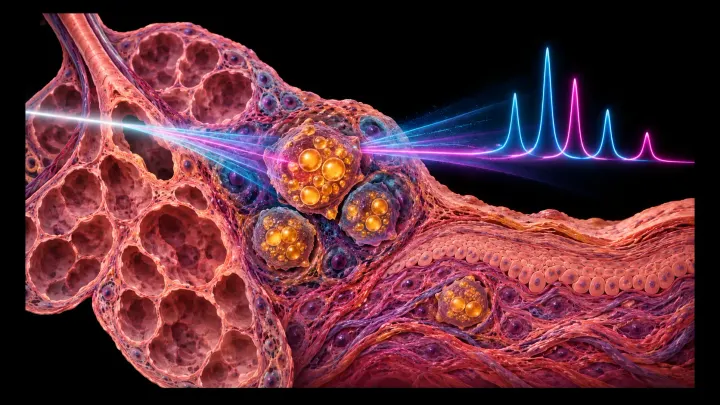
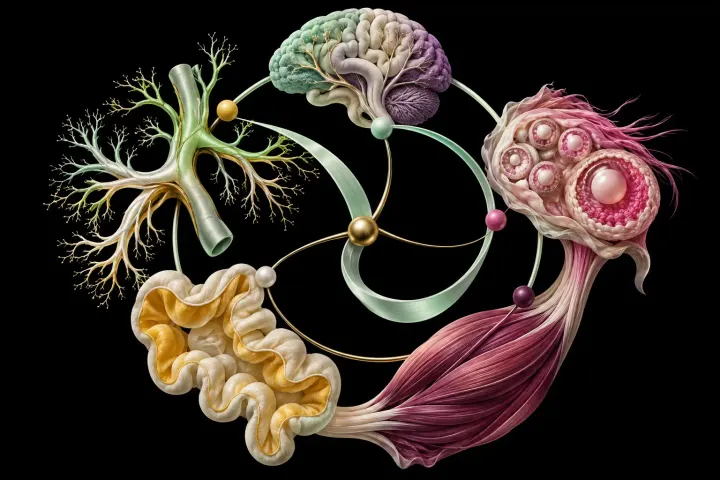
The U.S. National Institute on Aging describes aging biology as research into molecular, genetic, cellular, and physiological mechanisms underlying aging and age-related change. That sounds dry, but it is the useful frame. Longevity science is not mainly about vibes, supplements, or personal optimization routines. It is about repair systems, inflammatory signaling, stem-cell exhaustion, cellular senescence, mitochondrial function, epigenetic change, nutrient sensing, protein maintenance, and tissue decline.
The 2023 Cell review Hallmarks of aging: An expanding universe organized the field around twelve interacting hallmarks, including genomic instability, telomere attrition, epigenetic alterations, loss of proteostasis, disabled macroautophagy, deregulated nutrient sensing, mitochondrial dysfunction, cellular senescence, stem cell exhaustion, altered intercellular communication, chronic inflammation, and dysbiosis.
That list is not a menu of instant fixes. It is a map of why aging is hard.
Why aging biology is harder than one anti-aging pathway
Aging does not behave like one disease with one clean target.
Cells accumulate damage. Tissues lose repair capacity. Immune systems become more inflammatory and less precise. Metabolism changes. Organs lose reserve. The same older person may have vascular risk, cognitive decline, muscle loss, immune dysfunction, and medication burden at once.
That is why simple claims break so easily.
A supplement can affect one molecular pathway without improving human healthspan. A drug can extend lifespan in mice without becoming safe or effective as a broad human intervention. A biomarker can move in the right direction without proving that someone will avoid frailty, dementia, cancer, cardiovascular disease, or disability.
This is the reason Vastkind treats longevity through an evidence ladder. The useful question is not: does this sound biologically plausible? The useful question is: what kind of evidence do we actually have?
The evidence ladder: mechanism, animal data, biomarkers, human outcomes
Longevity claims should be judged by where they sit on the evidence ladder.
A mechanism is the first step. It might show that a pathway matters in aging biology, such as mTOR signaling, senescent-cell burden, DNA methylation, mitochondrial stress, or inflammation. Mechanisms are important because they explain why an intervention might work. They do not prove that it does work in humans.
Animal data is the next step. The National Institute on Aging's Interventions Testing Program tests candidate interventions across multiple mouse sites to reduce weak single-lab findings. That is stronger than many preclinical claims. But even strong mouse evidence remains mouse evidence. Human bodies, disease patterns, doses, safety tradeoffs, and lifetimes are different.
Biomarkers are a third step. Epigenetic clocks, inflammatory markers, blood panels, walking speed, grip strength, imaging, and other measures can help researchers track aging-related change. They are especially valuable because waiting decades for lifespan outcomes is impractical. But biomarkers can be overread.
A 2024 analysis of 51 human intervention studies on DNA methylation aging biomarkers found that some epigenetic clocks appear responsive to interventions and may help trial design. That is useful. It is not the same as proving that a given intervention extends healthy human life.
Human outcomes are the hardest step. These include disease incidence, frailty, function, hospitalization, mortality, cognition, mobility, immune response, or other endpoints that matter outside a lab report. This is where longevity science becomes clinically meaningful.
The field becomes credible when it moves up the ladder. It becomes misleading when marketing skips the ladder entirely.
Why healthspan matters more than lifespan promises
The strongest longevity question is not whether people can live longer in theory. It is whether older people can stay functional for longer in practice.
A real healthspan effect would show up in things people, clinicians, insurers, and health systems can recognize: fewer years with disabling disease, slower frailty progression, preserved muscle function, better immune resilience, delayed onset of age-related conditions, or lower risk across several diseases at once.
That is the geroscience promise. Instead of treating one disease after another, researchers ask whether targeting aging biology can shift several age-related risks together.
This is why trials such as Targeting Aging with Metformin became important in the field. The point was not that metformin had already solved aging. The point was trial architecture: can a drug be tested against a cluster of age-related outcomes, rather than only one narrow disease endpoint?
That is a better question than most consumer longevity claims ask.
Where longevity claims usually break
Longevity claims usually break at translation.
The first break is mouse-to-human translation. Mice are essential to aging research, but they are not small humans with shorter calendars. A lifespan gain in mice can reveal a real pathway and still fail to become a useful human intervention.
The second break is biomarker overreach. A biological-age test can be interesting, especially when measured repeatedly and interpreted carefully. But a lower clock reading does not automatically mean a person has become younger in a clinically meaningful way. Vastkind has covered this directly in Biological Age Testing: What Epigenetic Clocks Can Tell You-and What They Can't.
The third break is supplement logic. Many products borrow credibility from serious biology. NAD metabolism, autophagy, inflammation, senescence, mitochondrial function, and glucose regulation are real scientific areas. But a product touching a pathway is not proof that it improves healthspan. Mechanism is not outcome.
The fourth break is endpoint selection. If a trial measures the wrong thing, for too short a time, in the wrong population, it may produce a clean result that does not answer the real question. This is why The Longevity Industry Has a Measurement Problem is not a side issue. Measurement is the bottleneck.
The fifth break is safety. Intervening in aging biology means touching systems that also help the body respond to stress, infection, cancer risk, metabolism, fertility, and repair. More activity in a pathway is not always better. Less activity is not always safer.
Why This Matters
Longevity science is becoming a consumer, medical, investment, and policy problem at the same time.
Consumers are already buying tests, supplements, devices, and clinical packages that use the language of aging biology. Doctors increasingly face patients who bring biological-age reports or protocol stacks into appointments. Founders raise capital around mechanisms that may still be preclinical. Investors need to distinguish platform science from narrative arbitrage. Regulators will eventually have to decide which endpoints count when a company claims to target aging itself.
The stakes are not only personal. If even modest healthspan gains become real, hospitals, insurers, employers, pension systems, caregiving markets, and families would feel the effects. If the field remains noisy, the cost will be different: wasted money, confused patients, weak trials, and public distrust when grand promises fail.
The correct posture is not cynicism. Aging biology is one of the most important scientific frontiers because it sits underneath many diseases at once.
The correct posture is evidence discipline.
Evidence Boundary
This guide is not medical advice and does not recommend any supplement, drug, test, or protocol.
The evidence supports a cautious conclusion: aging biology is real, and several mechanisms are scientifically important. Some interventions show meaningful signals in animals, biomarkers, or narrow human contexts. But no current consumer longevity claim should be treated as proven extension of healthy human lifespan unless it has shown durable human outcomes that matter clinically.
The most useful way to read longevity coverage is simple:
- Mechanism means possible.
- Animal evidence means worth testing.
- Biomarker movement means signal, not proof.
- Human health outcomes are the real threshold.
That threshold is why Rapamycin Still Needs Human Proof remains the right kind of headline for much of the field. Serious biology can still be unfinished medicine.
What to read next
Start with the Longevity hub for the full Vastkind map of aging science, evidence boundaries, and claim checks.
For the practical bottleneck, read The Longevity Industry Has a Measurement Problem. It explains why the field cannot mature until it can measure progress without turning every marker into a marketing claim.
If you want weekly orientation across frontier technology, get The Vastkind Briefing: what changed, why it matters, and what most coverage missed.