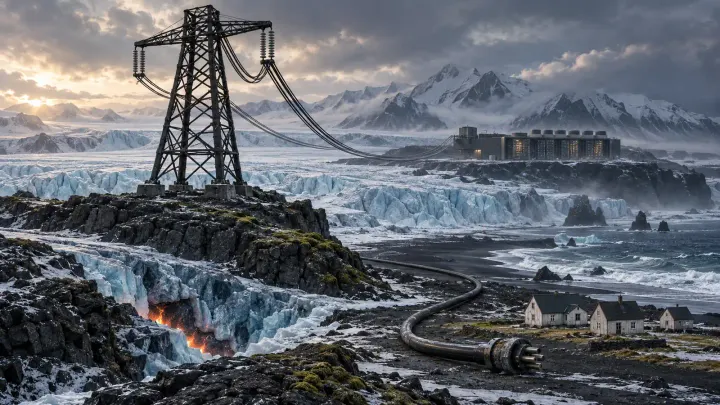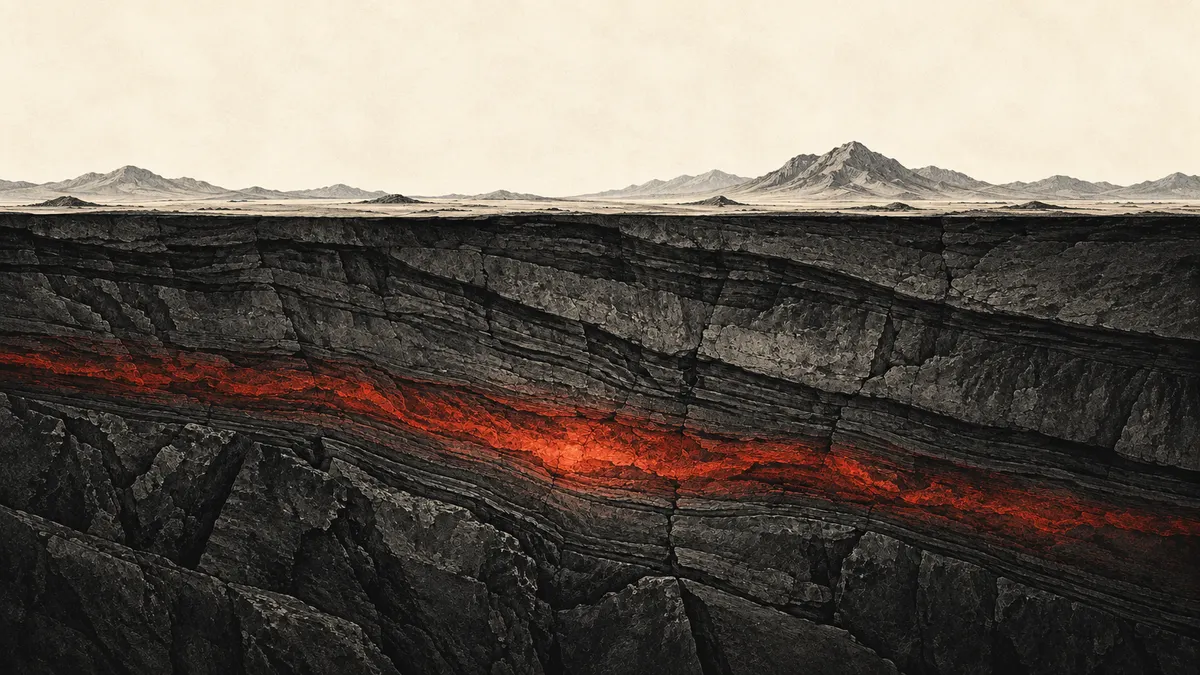
A data center can look like a computing project until you ask where its electricity will come from. Then the interesting objects become wells, turbines, cables and a contract for power that does not yet exist.
Fervo’s September 1 announcement of a geothermal agreement with Google concerns a potential Utah data center whose final plans remain conditional. For Vastkind, the revealing detail is the order of work: arranging future electricity is already part of developing the computing site.
Three different things are happening at Cape Station
The numbers are easy to combine and easy to misread. An earlier plant is moving through construction and commissioning. A new purchase agreement commits to later delivery. Further capacity remains conditional. Keep those three tracks separate.
| Track and evidence | Reported state | Next stated milestone |
|---|---|---|
| Earlier phase · August 12 update | Approximately 100 MW. Two of three generating blocks mechanically complete; first block commissioning. | First block: test power targeted for Q4 2026. Other blocks: initial power expected in early 2027. |
| New Google agreement · signed August 26 | 396 MW in four 99 MW stages; 15-year delivery term. | Target commercial operation dates begin in Q3 2028. |
| Possible expansion · September 1 filing | Commitment to offer an expansion option of roughly 600 MW. | Requires Google’s acceptance and a mutually acceptable definitive agreement. |
These are company reports and targets, not Vastkind inspections. The earlier phase is separate from delivery under the new Google agreement. No row expresses a percentage complete: mechanical work, contractual obligations and operating performance cannot sensibly be added into one progress bar.
A committed buyer can give a developer a stronger basis for building, while reserving a prospective supply for the customer. That is the commercial value we see in the deal. It does not settle the eventual cost of producing or delivering the electricity. The filing does not disclose the purchase price.
The heat is there. A usable path through the rock is the job.
In an enhanced geothermal system, operators create or reopen fractures under controlled conditions so fluid can move through hot rock. The Department of Energy’s explanation describes this engineered circulation path. Heat reaches the surface with the fluid; the generation process uses steam or vapor to drive a turbine. This is different from a design that keeps fluid inside sealed underground pipes.
As the Energy Information Administration explains, geothermal generation does not depend on the time of day, sunshine or wind. That makes it a potentially useful source for persistent demand. Weather independence is a capability; uninterrupted output from a particular plant still has to be demonstrated through operation.
Storage performs another job. The DOE’s storage overview explains how energy can be held and released later, shifting supply toward times when it is needed. Geothermal supplies heat for generation; a battery shifts electricity through time. Those roles can complement each other.
Units make the distinction concrete. A hypothetical generator delivering 396 MW steadily for one hour supplies 396 MWh. That is arithmetic, not an output forecast. An annual estimate needs assumptions about when the plant runs and how much power it actually produces. Horsham’s planned two-hour battery offers a second example of why power and energy should stay separate.
The delivery route is part of the invention
Fervo’s filing describes a prospective private delivery system, potentially supplemented by other resources. Its configuration remains subject to engineering feasibility and regulatory approvals. The contract therefore does not establish a finished route from the plant to the computing load.
That distinction matters beyond geothermal. Berkeley Lab’s 2026 interconnection analysis found that projects completed in 2025 took a median of more than five years from connection request to commercial operation in regions with available data. The analysis concerns generation and storage seeking transmission access. It is neither a data-center wait-time estimate nor a prediction of Cape Station’s schedule.
For a reader following this project, three types of evidence would move the story forward: operating results from the earlier blocks, a completed delivery arrangement for the new commitment, and a clearer account of who pays for the physical system. They answer different questions about whether this approach can be repeated elsewhere.
There are local questions, too. EIA identifies well-construction costs and induced seismicity among EGS challenges. Fervo says existing ratepayers will bear no cost from the deal. Its announcement is a statement of that position, rather than a detailed allocation of infrastructure costs.
What makes the agreement worth watching is the attempt to build dependable supply alongside new demand. The project ledger above gives us a way to revisit that idea without confusing a signed promise with delivered power. It also belongs in our wider guide to useful breakthroughs: a capability becomes valuable when the surrounding system can carry it into everyday use.
Source-based analysis; no site inspection or equipment test.