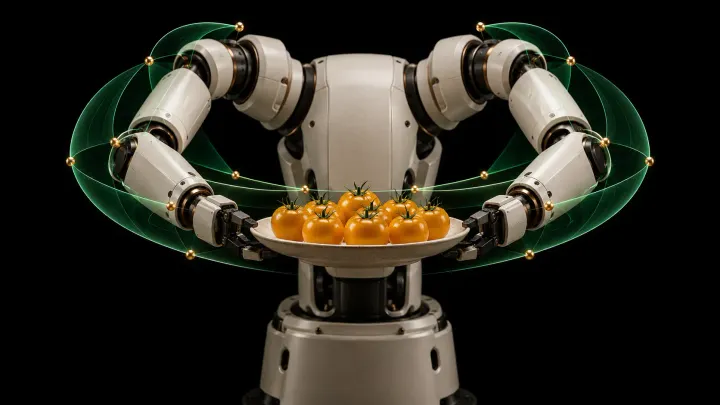
The weakest way to talk about robot society is to imagine one dramatic moment when humanoids suddenly arrive and everything changes.
That is not how this will happen.
A robot society will be built the way most technological shifts are built: unevenly, operationally, and through systems that stop feeling experimental before the broader culture has found the right story for them.
That means warehouses before living rooms. Hospitals before dinner parties. Farms before friendship. Maintenance routines before machine charisma.
The important question is not whether robots will someday look impressively human. It is where they become reliable enough, useful enough, and normal enough to stay.
That threshold matters more than spectacle because reliability, not wonder, is what turns a machine into part of society.
The first robot society is a systems story
People still talk about robotics as if its future depends mainly on dramatic humanoid breakthroughs.
That is too narrow.
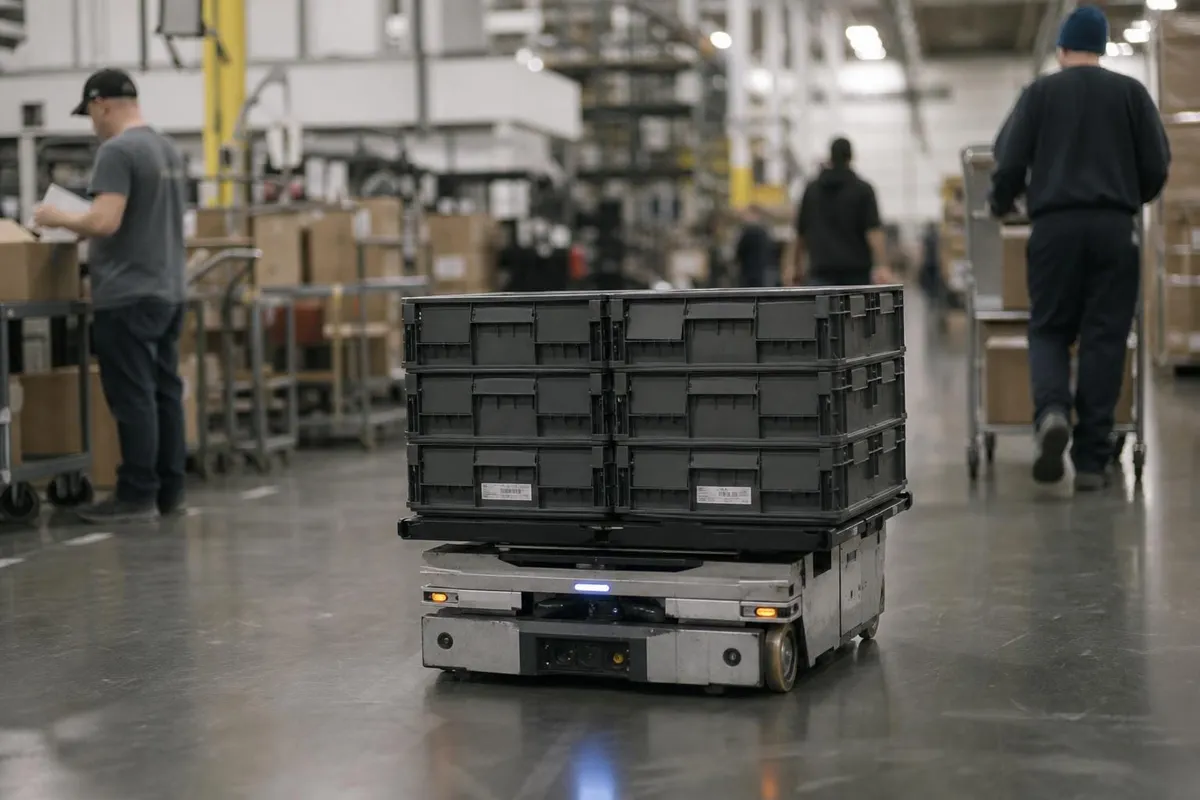
Robots are already becoming routine in settings where the task environment is structured, the economic logic is clear, and the tolerance for error is tightly managed. Warehouses, fulfillment centers, surgical settings, inspection workflows, agriculture, and industrial handling are all more important to the near-term shape of robot society than most futuristic consumer demos.
Why? Because these are the environments where robotics can earn trust by doing repeatable work under real constraints.
A robot does not need to become your friend to become socially important. It only needs to become a dependable part of a workflow that millions of people rely on.
Once that happens, the machine stops being a novelty and starts becoming infrastructure.
Reliability matters more than intelligence theater
A lot of robotics coverage still confuses impressive demos with meaningful deployment.
A robot that can perform an eye-catching task once on stage is not the same thing as a robot that can perform less glamorous tasks all day, under changing conditions, with acceptable safety, cost, uptime, and supervision requirements.
That is the real threshold.
In robotics, the central test is usually not “can it do the trick?” but “can it keep doing the job?”
This is where embodied systems become much harder than software. Physical environments push back. Floors vary. Lighting changes. Objects shift. Humans improvise. Edge cases multiply. Mechanical wear appears. Recovery behavior matters.
That is why the robotics future will not be won by the systems that look the most futuristic. It will be won by the systems that are robust enough to survive ordinary reality.
For the stack logic behind that shift, see Isaac GR00T: Why NVIDIA Is Building the Stack, Not Just the Robot Model and Optimus on Ice: Tesla's Humanoid Robot Hits a Wall in 2025.
Work changes before culture catches up
When robots gain real footholds, the first visible change is usually not philosophical. It is operational.
A warehouse gets reorganized around machine paths. A hospital adjusts responsibilities because one class of robotic system can take over a narrower task with greater precision or endurance. A farm uses automated systems to stabilize repetitive labor under tighter margins and labor shortages.
That changes human work even when humans remain central.
Jobs do not vanish all at once. Instead, responsibilities get redistributed. People supervise more, intervene at exception points, manage fleets, maintain systems, validate outputs, and handle the unstructured parts machines still struggle with.
This is why the real robotics question is not simply “replacement or no replacement?” That frame is too blunt.
The sharper question is how institutions redesign work once machines become dependable enough to take over specific physical routines.
Sometimes that will reduce drudgery. Sometimes it will increase pressure on the remaining human roles. Often it will do both.
Care and medicine are where the social stakes get more intimate
Robots in logistics matter economically. Robots in healthcare and care settings matter emotionally and politically.
The moment a machine starts handling rehabilitation, surgery assistance, patient support, elder assistance, or repetitive clinical tasks, the discussion changes. It is no longer just about efficiency. It becomes a question of trust, dignity, accountability, and what kinds of human presence society is willing to thin out.
That does not mean robotics should stay away from care. In many cases, robotic systems can improve precision, consistency, safety, or reach.
But care is where the “robot society” label stops feeling metaphorical.
A machine that helps package goods changes labor. A machine that helps monitor a patient changes the emotional architecture of dependency itself.
That is why society needs a more serious vocabulary here. Not all robotic assistance is dehumanizing. Not all automation in care is benign. The real issue is what role the system is playing, what kind of oversight remains, and whether the human relationship at the center of care is being supported or hollowed out.
For a more targeted biotech-medical angle, see Medical microrobots: from hype to teeth, sinuses, and tumors.
A robot society normalizes gradually, then suddenly
Most people will not wake up one morning and decide they live in a robot society.
The shift will feel incremental until it no longer does.
One year it is warehouse automation. Then delivery support. Then more surgical robotics. Then inspection bots in public infrastructure. Then assistive systems in elder care. Then service robots in tightly scoped commercial spaces. Then humanoids become useful in just enough repetitive physical environments that the cultural picture starts catching up to the operational one.
By the time the public narrative turns dramatic, the deeper integration may already be well underway.
This is why early governance matters. Safety standards, accountability rules, labor design, procurement norms, and public legitimacy all get easier to shape before the systems become ambient and economically entrenched.
That is the same reason robotics should be treated as a governance topic, not just a product category. See Agentic AI Governance: Guardrails Before Autonomy Scales.
Why This Matters
Robot society is not mainly a story about whether humanoids become lovable or conscious. It is a story about when embodied systems become normal enough to reorganize work, care, and public infrastructure. Once robots gain permanent operational roles, they stop being gadgets and start becoming social facts. That means the real decisions are not only technical. They are about trust, labor design, safety, dignity, and who gets to decide where machines belong.
Conclusion
The future of robotics will not arrive as one theatrical reveal.
It will arrive as a series of narrow wins in the physical world.
A robot society begins when machines stop being occasional tools and become dependable participants in the systems people rely on every day. That transition will happen first where repeatability, scarcity, and operational value are strongest — not where the sci-fi imagery is most seductive.
So if you want to understand where robotics is actually going, stop asking when the robots become magical.
Ask when they become normal.
That is the point at which society really changes.
CTA: Read next: Isaac GR00T: Why NVIDIA Is Building the Stack, Not Just the Robot Model and Optimus on Ice: Tesla's Humanoid Robot Hits a Wall in 2025