AT&T sued California in May 2026 because it wants to stop being forced to keep traditional phone service available across its old wireline territory.
The easy reading is that this is a fight over landlines. The harder reading is more useful: technology transitions do not end when most people leave an old system. They end when someone pays for the last users, the reliability rules, and the public obligations left behind.
That is the deeper meaning of legacy infrastructure costs. The future arrives unevenly, then asks the past to keep running as backup.
AT&T's copper lawsuit is really about legacy infrastructure costs
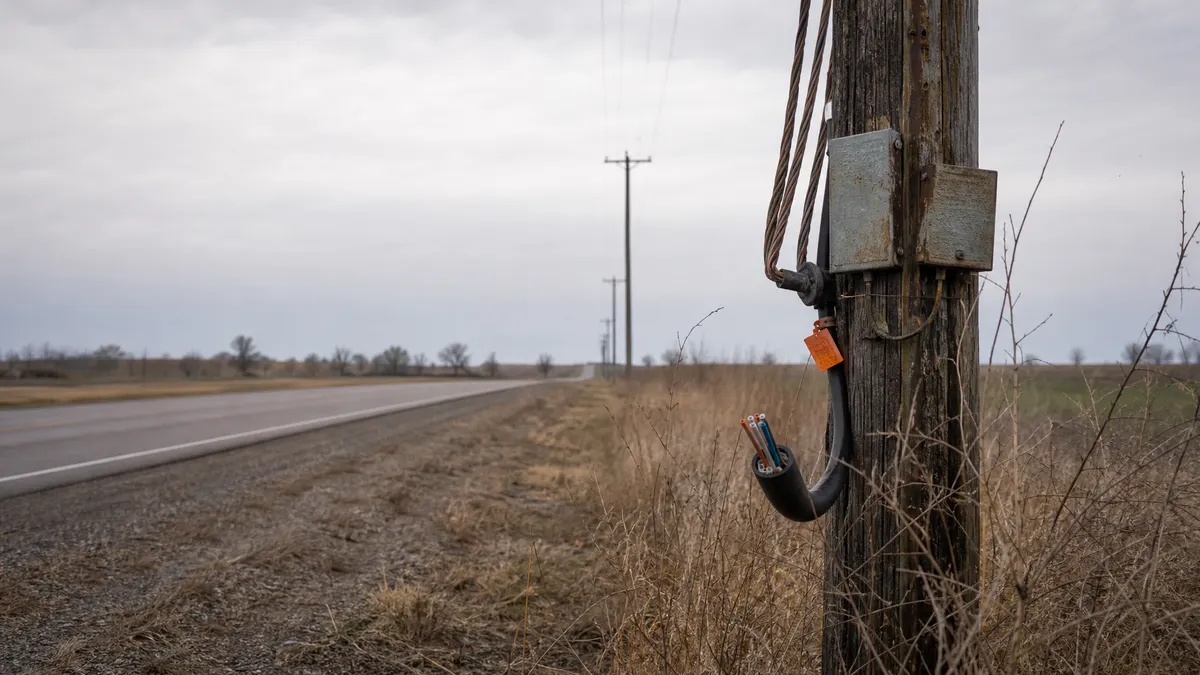
AT&T's complaint says California requires it to spend about $1 billion each year maintaining a century-old copper telephone network. The company says those copper wires now serve about 3 percent of households in its California territory.
Those are AT&T's claims, not independently audited public facts. But the structure of the dispute is clear.
California's Carrier of Last Resort rules require a designated provider to offer basic telephone service to customers in its service territory. In June 2024, the California Public Utilities Commission dismissed AT&T California's application to withdraw from that role. The CPUC framed the issue as access to essential service and regulatory oversight, not as nostalgia for copper.
AT&T sees a shrinking, costly network. California sees a safety net that still matters for households that may not have equal substitutes.
That is why the case matters beyond telecom. Every major technology transition creates this same question: when the profitable majority has moved on, who carries the remaining cost of universal access?
Why copper gets more expensive after most people leave
Old networks do not become cheap just because fewer people use them. They often become worse economic machines.
A copper telephone network still needs poles, cabinets, power, technicians, repair crews, compliance systems, billing support, outage response, and regulatory reporting. If the customer base collapses, the fixed costs do not shrink at the same speed.
AT&T's complaint argues that California has already suffered about 2,000 copper-theft outages this year and that the copper network drains more than 100 million kilowatt-hours annually. Again, those are AT&T's allegations. But they point to a real mechanism: a physical network can become more fragile as its commercial value declines.
Copper has resale value. Remote lines are harder to monitor. Storm damage still happens. Maintenance crews still have to roll trucks to serve a smaller customer base.
The old system becomes a stranded obligation.
This is why infrastructure transitions are different from app transitions. If users leave an old social network, the company can shut down servers. If users leave a telephone network unevenly, regulators may still ask whether a rural household, an older resident, or a low-income customer has a dependable replacement.
The last users are not an edge case for regulators
The last users of a legacy system are often the reason the system was regulated in the first place.
A dense urban customer can usually choose between fiber, cable, wireless, and satellite. A rural household at the edge of a service area may face weaker wireless coverage, longer repair times, higher broadband prices, or backup-power problems during an outage.
California's position has been that AT&T is not barred from replacing copper with fiber or other technologies. The CPUC's 2024 decision and related statements say the carrier-of-last-resort rules are technology-neutral and do not prevent copper retirement or fiber investment.
That distinction matters. California is not necessarily saying copper must live forever. It is saying the service obligation cannot disappear before reliable alternatives are proven for the people still depending on it.
AT&T's counterargument is that the federal government has already allowed the company to stop signing up new customers for traditional plain old telephone service, often called POTS. The company is also asking the Federal Communications Commission to let it discontinue copper-based service for large blocks of remaining residential and business customers, according to Ars Technica's summary of AT&T's FCC filings.
This is the legal conflict: federal technology-transition policy is moving toward network retirement, while California wants service obligations to remain enforceable where replacement quality is uncertain.
Why This Matters
The copper fight shows why the future is never only a product roadmap.
A company wants to retire an old asset. A regulator wants to protect essential access. A household wants the phone to work during an emergency. A low-income customer may rely on a discount program. A rural resident may not have the same wireless signal that a city customer takes for granted.
Those are not abstract values. They are bills, outages, service calls, backup batteries, coverage maps, court filings, and regulatory duties.
The same pattern appears across frontier systems. AI data centers force utilities to rethink power planning, as Vastkind has covered in AI Data Center Power Demand Is Turning Utilities Into Compute Infrastructure. Post-quantum cryptography turns old certificates and forgotten systems into a migration problem, as in Post-Quantum Cryptography Is Becoming an Inventory Problem. Compute itself is physical and institutional, not just chips, as explained in What Is Compute Infrastructure?
In each case, the shiny replacement is only half the story. The other half is inventory: which assets still exist, who depends on them, which rules attach to them, and who pays when the old stack becomes uneconomic.
The evidence boundary
The safest claim is not that AT&T is right or California is right. The safest claim is that the dispute exposes a transition-cost problem.
AT&T's $1 billion annual maintenance figure is a litigation claim. The 3 percent household figure is also AT&T's framing of its California territory. The copper-theft and energy-use numbers come from the company's complaint. They should be treated as claims in an active legal and regulatory fight.
The CPUC's position is also narrower than some coverage suggests. California has argued that its rules do not block AT&T from investing in fiber or retiring copper facilities. The regulator's concern is whether customers retain access to essential service when AT&T withdraws as the required provider.
The FCC's March 2026 Network Modernization Order adds another layer. It streamlines parts of the discontinuance process and discusses state rules that conflict with federal discontinuance authority. But active disputes over specific state obligations can still require courts, regulators, and carriers to fight over the boundary.
So the article's core argument is not a legal prediction. It is an infrastructure lesson.
When an old network becomes socially necessary but commercially unattractive, technology policy becomes a cost-allocation fight.
What this signals for other technology transitions
The copper network is old, but the pattern is current.
Electric grids must serve new data centers while maintaining older distribution equipment. Hospitals adopt AI systems while keeping manual workflows for safety and liability. Banks modernize payment rails while preserving legacy compliance systems. Software vendors deprecate older protocols, then discover that governments, factories, and schools still depend on them.
The same transition sequence keeps appearing.
First, the new system wins the growth market. Then the old system loses users. Then the remaining users become more expensive per person. Then the company asks to exit. Then regulators ask what happens to people who cannot move as easily as the market did.
That is the future paying for the past.
It is not a sentimental argument for preserving obsolete systems forever. Some old networks should be retired. Copper will not be the communications backbone of the next century.
But retirement is not just a switch-off decision. It is a transfer of obligation.
Someone must prove the replacement works. Someone must pay for edge cases. Someone must define minimum reliability. Someone must handle emergency access. Someone must decide whether the last 3 percent are a business problem, a public-service problem, or both.
The copper lawsuit is useful because it makes that invisible bill visible.
The next technology transition will have a different object: a transformer, a certificate, a clinical workflow, a warehouse robot, a software protocol, a data center interconnection request. The question will be the same.
Who gets to leave the old system, and who is still required to keep it alive?
Read deeper
To understand why modern systems still depend on physical bottlenecks, start with What Is Compute Infrastructure?. The same logic that makes AI depend on power, chips, and data centers also explains why telecom retirement is never just a software upgrade.
Sources
- AT&T complaint, U.S. District Court for the Southern District of California, filed May 20, 2026: https://storage.courtlistener.com/recap/gov.uscourts.casd.856308/gov.uscourts.casd.856308.1.0.pdf
- California Public Utilities Commission Decision 24-06-024, June 20, 2024: https://docs.cpuc.ca.gov/PublishedDocs/Published/G000/M533/K846/533846154.PDF
- FCC Network Modernization Order, FCC 26-19, March 2026: https://docs.fcc.gov/public/attachments/FCC-26-19A1.pdf
- Ars Technica, Jon Brodkin, May 21, 2026: https://arstechnica.com/tech-policy/2026/05/att-sues-california-in-attempt-to-shut-off-old-phone-network/