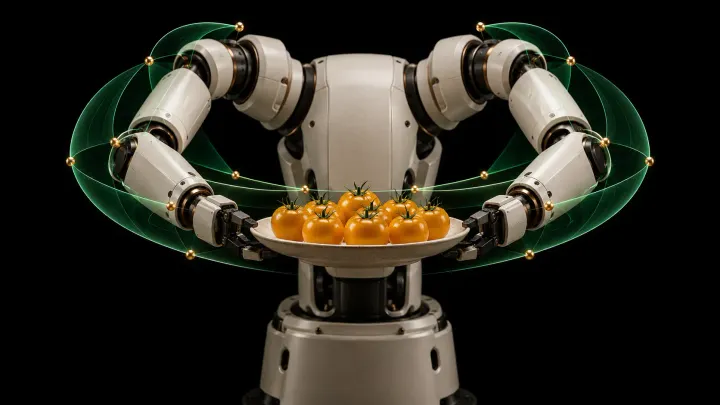
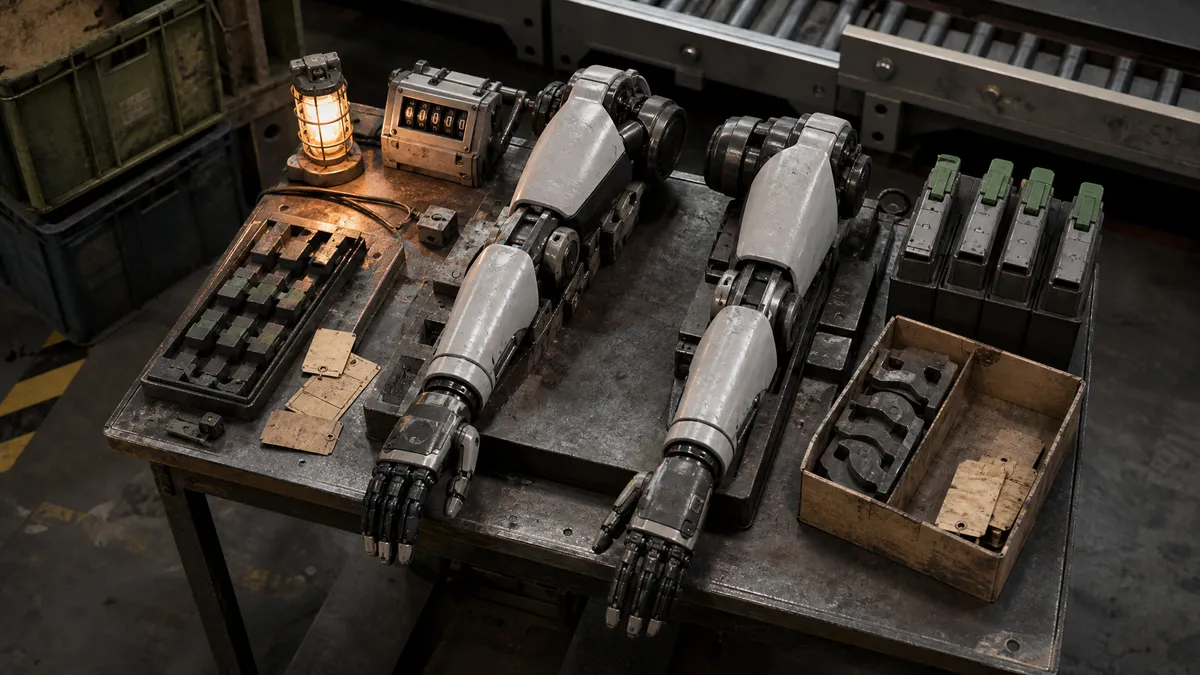
Figure AI's latest humanoid robot livestream looks like another internet spectacle.
The better reading is colder: robotics companies are starting to compete on uptime.
Figure CEO Brett Adcock said on May 21, 2026, that the company's F.03 humanoid had been running for nine days, 24/7, fully autonomous, with no downtime, and that the team would close the test at 200 hours. The livestream showed humanoid robots handling packages, with Figure presenting the run as a sustained autonomous work test rather than a choreographed clip.
That does not prove humanoids are ready to take over warehouses. It does prove the terms of the argument are changing.
The old robotics demo asked: can the robot do the task once?
The new commercial question is harsher: can it keep doing the task when nobody wants to watch anymore?
Figure's Livestream Is a Better Signal Than Another Robot Demo
Short humanoid videos are easy to overread. A robot dancing, running, folding laundry, or picking up an object can hide resets, failed takes, narrow setup conditions, and human preparation outside the frame.
A multi-day livestream is harder to fake as a signal, even if it is still company-controlled. It exposes boredom. It exposes repetition. It makes the robot prove continuity instead of drama.
That is why Figure's package-sorting run matters.
According to Ars Technica, the event began on May 13, 2026 as an eight-hour demonstration with Figure 03 robots inspecting barcodes on small packages and placing them on a conveyor belt with the barcode facing down. Adcock described the work as autonomous and without human intervention. After the first shift, Figure kept the stream running.
The task is narrow. That is not a weakness by itself.
Commercial robotics usually begins with narrow work because narrow work can be measured. A robot either places the package correctly or it does not. It either keeps cycling or it stops. It either needs a human to rescue it or it does not.
That makes this more useful than another glossy humanoid montage.
Vastkind has argued before that the future of robotics will be decided by reliability, not robot theater. Figure's livestream is another example of that shift. The robot is not being judged by how human it looks. It is being judged by whether it can stay in the work loop.
Uptime Is Becoming the Commercial Robotics Benchmark
For warehouses, factories, hospitals, and logistics networks, the meaningful unit is not awe. It is capacity.
A company does not buy a robot because it performs one impressive motion. It buys a robot if the machine reduces labor gaps, increases throughput, works safely near people, and does not create a maintenance burden larger than the job it replaces.
That is why uptime matters.
A humanoid that works for 30 minutes is a demo. A humanoid that works through a shift is a pilot. A humanoid fleet that can rotate, recharge, recover, and keep a station running across days becomes a different kind of claim.
It starts to look less like a robot and more like a labor asset.
The important measurement is not only packages per hour. It is packages per hour after battery cycles, sensor drift, object variation, software hiccups, gripper wear, awkward bags, and the small failures that make physical automation expensive.
This is where humanoids face the same unforgiving economics as every other warehouse machine. Conveyors do not need to look impressive. Robotic arms do not need to seem alive. Existing automation wins because it is boring, fast, maintainable, and predictable.
A humanoid has to justify its more complex body.
The case for that body is flexibility. Human-shaped robots can theoretically use workspaces, tools, shelves, carts, doors, and packages designed around people. But that advantage only matters if the system stays online long enough to absorb real work.
That is the labor question behind the livestream. Not whether one Figure robot can beat one person on camera. The question is whether humanoid robotics can turn AI progress into reliable hours of physical work.
That connects directly to the broader robot labor shock. The first jobs under pressure will not be glamorous. They will be repetitive, measurable, physically tiring tasks where managers already track throughput and downtime.
The Mechanism Is Rotation, Onboard Autonomy, and Narrow Work
Figure's technical story is not only the humanoid body. It is the autonomy stack around it.
In its Helix 02 technical post, Figure describes the system as full-body autonomy that connects onboard sensors to whole-body control. The company says Helix 02 uses vision, touch, proprioception, and learned control to coordinate walking, manipulation, balance, and dexterity as one system.
The architecture matters because package sorting is not just a hand task.
The robot has to see the package, orient it, grasp it, move it, place it, manage balance, and continue through repeated cycles. If the body and the perception system fall out of sync, the work stops.
Ars Technica reported another important detail: the robots could rotate out when batteries ran low, with other robots stepping in. That matters because the promise is not one robot acting like a tireless worker. The more plausible near-term model is a fleet system that keeps the station active while individual machines recharge, swap, or recover.
That is less cinematic. It is also more commercially serious.
A warehouse does not need a robot to imitate a person perfectly. It needs the work cell to stay productive. If one robot steps away and another takes over without breaking the flow, uptime becomes a system property, not a single-machine miracle.
This is also why NVIDIA's robotics stack matters beyond one model name. Humanoid deployment is not only about the robot body. It depends on simulation, training data, onboard inference, failure analysis, fleet management, and the slow industrial discipline around physical AI.
The Evidence Boundary Still Matters
Figure's livestream is a strong signal. It is not independent proof of broad deployment readiness.
The test was company-run. The task was narrow. The environment was staged. The claims around autonomy, no downtime, failures, and intervention still need careful definitions.
No downtime can mean different things.
It could mean the work cell never stopped. It could mean no robot suffered a disabling failure. It could mean the autonomy stack did not fail, while robots still rotated for batteries. It could exclude staging, human setup, package-flow management, remote monitoring, or maintenance outside the camera's main focus.
Those distinctions matter.
A real warehouse would ask harder questions: What is the intervention rate per thousand packages? What happens with crushed boxes, reflective packaging, missing labels, clutter, or a person walking through the work area? How often do hands, sensors, joints, and batteries need service? What does the robot cost per productive hour? What happens when the internet is down, a bin is misplaced, or a package does not fit the training distribution?
The public livestream does not answer all of that.
But it does raise the standard for everyone else.
If Figure can credibly claim hundreds of autonomous hours, competitors will be pushed to show more than polished clips. Investors, customers, and workers should ask for logs, definitions, audited uptime, failure categories, and deployment economics.
That is healthy.
Robotics needs less theater and more accounting.
Why This Matters
Humanoid robots become economically important only when they can be scheduled like labor and maintained like equipment.
That is the shift Figure is pointing toward.
If humanoid companies can sell reliable hours of physical work, the effect lands first in warehouses, light manufacturing, retail backrooms, hospitals, and facilities work. These are places where tasks are repetitive enough to measure, messy enough to need flexibility, and expensive enough that managers already watch staffing gaps closely.
But the same signal also creates pressure.
Workers will not experience humanoid robotics as an abstract breakthrough. They will experience it as new productivity comparisons, new scheduling assumptions, new safety policies, and eventually new bargaining conditions. Companies will ask which shifts can be covered by machines, which tasks still need people, and which jobs become supervision of robot fleets rather than direct physical handling.
That future is not here because one livestream went viral.
It becomes more plausible when the benchmark changes from look what the robot can do to look how long the robot can keep doing it.
That is why Figure's 200-hour target is worth watching. Not as proof that humanoids have arrived, but as a sign that the industry is finally moving toward the metric that matters.
Runtime.
The robot that wins may not be the one with the most human walk or the most viral clip. It may be the one that quietly stays useful after the audience leaves.