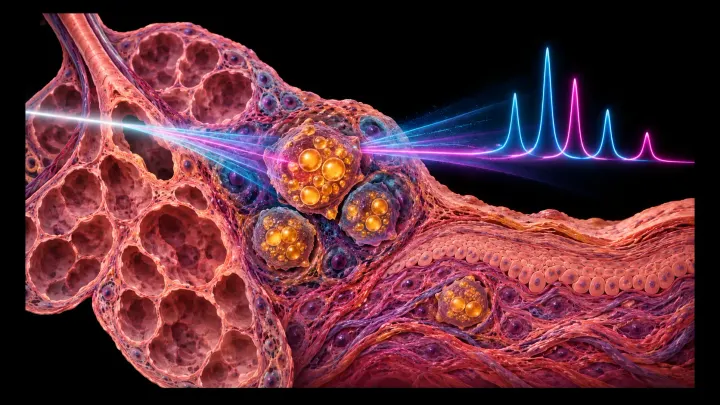
The immune system of a person over 110 is not necessarily a faded version of a younger one. In a human study highlighted this week, rare cytotoxic CD4 T cells expanded sharply around age 100 and formed large, individual-specific clones. The cells looked like products of repeated encounters with persistent targets rather than a uniform anti-aging program.
That is the interesting finding—and also the limit. The study compared people at different ages; it did not show that these cells make anyone live longer or prevent cancer. Supercentenarians are extreme survivors, so a feature found in their blood could be protective, incidental or a response to threats they have already survived.
In Plain English: Most CD4 T cells coordinate other immune cells. Cytotoxic CD4 T cells can also kill abnormal or infected cells directly. A “clone” is a family of T cells carrying the same receptor, expanded after recognizing a particular target. A large clone reveals repeated or sustained stimulation, but not the identity of the target or whether the response is beneficial.
The Shift Appears Around Age 100
The Cell Reports study profiled T cells from 28 Japanese participants: eight aged 70–99, ten centenarians aged 100–109 and ten supercentenarians aged 110 or older. It combined single-cell gene expression, surface-protein measurements and T-cell-receptor sequencing, then compared the findings with more than five million cells from public datasets.
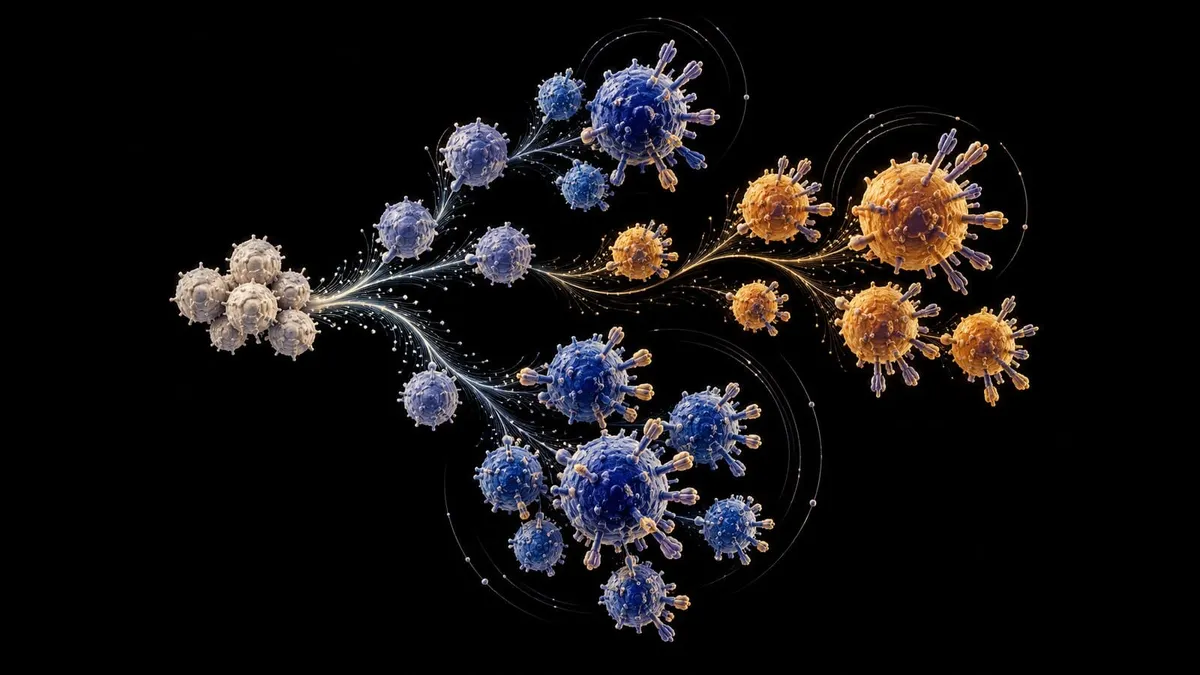
Cytotoxic CD4 T cells made up a median 4.0 percent of CD4 T cells in the 70–99 group, 9.6 percent in centenarians and 17.6 percent in supercentenarians. The change was not simply “more killer cells.” The researchers identified a progression in which cells lost the surface markers CD27 and CD28 in sequence. An intermediate CD27-negative, CD28-positive state helped connect ordinary helper-like cells to the cytotoxic population.
The cells also lacked strong signs of exhaustion. That matters because chronic stimulation can leave T cells present but less capable of responding. Here, the pattern instead suggested continued adaptation in very old age.
Large Clones Point to Repeated Targets
T-cell receptors act as molecular recognition keys. When a T cell encounters a matching target, that cell can multiply, producing a clone with the same receptor sequence. In this study, the largest clone in each person accounted for an average 33.3 percent of cytotoxic CD4 T cells. The clones were mostly private—dominant in one individual rather than shared widely across the group.
That individuality is a clue. It fits a lifetime of different infections, abnormal cells and immune exposures better than one universal “longevity receptor.” Some receptor sequences resembled those found among T cells expanded in tumor samples, particularly lung cancer. But sequence similarity does not prove that the cells in these healthy participants recognized a tumor, and the researchers did not identify their antigens.
After stimulation outside the body, cells from the same clone produced different combinations of signaling molecules, including interleukins. That diversity suggests a clone can split into functional subgroups rather than behaving as one fixed army. A Nature Reviews Cancer research highlight published October 2 framed the result as a possible form of cancer surveillance, while emphasizing that the protective role remains a hypothesis.
Exceptional Survivors Cannot Establish Cause
The strongest interpretation is that immune aging can include active remodeling, not only decline. That corrects an overly simple story in which every useful immune population merely disappears with age. It does not convert the cells into a longevity therapy.
The cohort was small and cross-sectional. Researchers did not follow younger participants for decades to see who developed the cell pattern or who survived. Blood also gives only a partial view; cells in tissues can behave differently. The group needs to identify the targets recognized by the large clones and test whether they actually kill cancerous, infected or senescent cells in relevant human tissues.
The distinction mirrors other longevity evidence. The Human Senescence Atlas maps which aging cells exist where, but does not itself prove a treatment. Failed semaglutide Alzheimer trials show why a plausible biological story must survive a clinical endpoint. And Ca-AKG evidence illustrates why a changed marker is not the same as a longer, healthier life.
The next observable step is therefore specific: identify what the dominant clones recognize, measure what they do in tissues and test whether their activity predicts later disease or survival. Until then, the result is a compelling map of adaptation in extreme old age—not a recipe for reproducing it.
Production note: Vastkind reviewed the open-access Cell Reports publication record, the study’s detailed public summary, the authors’ institutional materials and the October 2 research highlight. We did not analyze participant samples.