Source-based product analysis. This article contains no Vastkind hands-on test or original product measurements.
Editorial correction, 6 September 2026: We removed unsupported clinical, accuracy, usability, price, and buying claims; identified the original model; and added measurement-specific limits and manufacturer precautions. The original publication date and URL have been retained.
Disclosure: This review contains affiliate links. If you buy through them, Vastkind may earn a commission at no extra cost to you.
The interesting question about a scale with several health functions is not how many numbers it produces. It is what each number allows a person to understand or do. A body-composition estimate, a heart-rhythm recording, and a wellness score have different purposes. Grouping them under one impressive product name can obscure those differences.
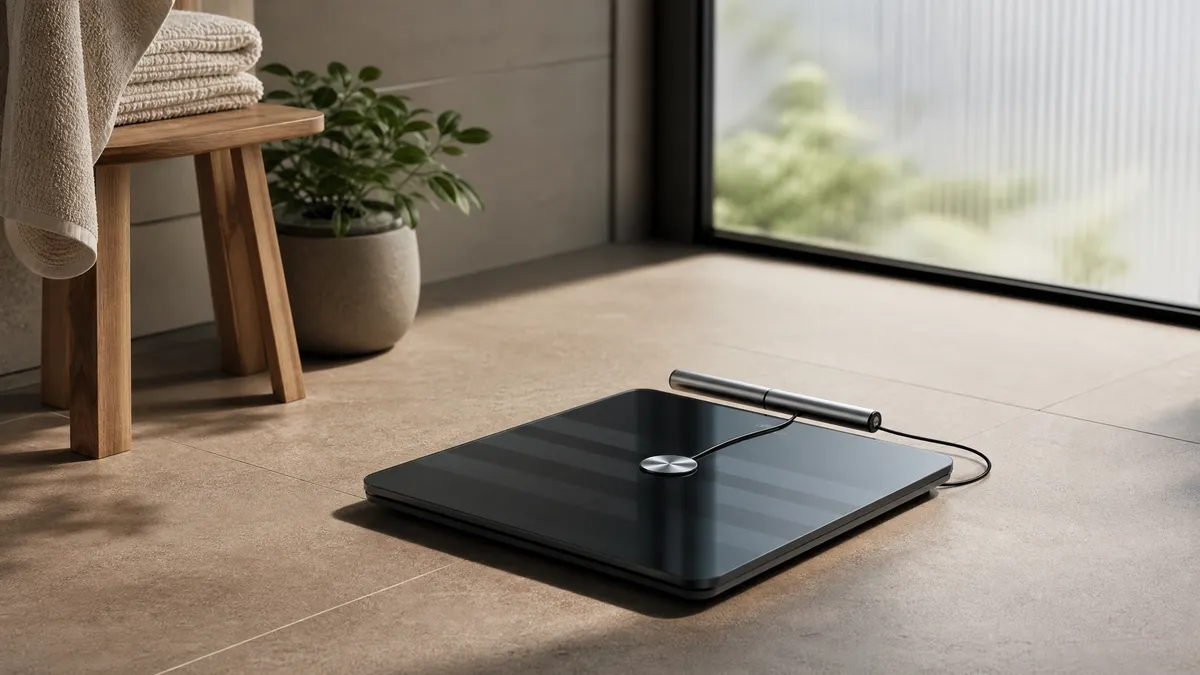
This article concerns the original Withings Body Scan, model WBS08, identified in its manufacturer product guide. It is not a review of Body Scan 2. Features and intended uses vary by country, so a specification from one market should not silently become a claim about another.
Separate the measurements
The US Body Scan product page, checked on 6 September 2026, describes segmental body-composition estimates, a six-lead ECG, vascular age, and an Electrodermal Activity Score. Its footnote identifies the latter as a wellness indicator derived from skin conductance, not a tool intended to diagnose or detect disease. Withings also says baseline metrics and trends remain available without the optional Withings+ subscription.
That is a map of the manufacturer's offering, not an independent assessment of accuracy or clinical benefit. In particular, the availability of an ECG function does not make every other displayed score a diagnostic measurement.
The non-US ECG instructions describe two recorded channels, with additional leads calculated for display, and classification of certain heart rhythms. They say the output is informational and should not guide clinical action without a qualified health professional. The instructions also state that the monitor cannot check for heart attacks and does not replace traditional diagnosis or treatment.
Those limits matter. A normal-looking consumer reading should not be used to dismiss worrying symptoms. If you think you are having a medical emergency, seek emergency help rather than waiting for a scale measurement.
Repeatability is not the same as accuracy
Imagine a hypothetical scale that reports nearly the same body-fat estimate on repeated measurements but consistently differs from an appropriate reference method. It could be repeatable without being accurate enough for the decision someone wants to make. Conversely, variation needs to be understood before every movement on an app chart is treated as a biological change.
This is an explanation of measurement, not a finding about Body Scan. Vastkind has not published an original comparison against reference measurements or a longitudinal dataset for this product. We therefore cannot claim superior accuracy, reliable early detection, or better health outcomes for its owners.
A useful practical assessment would record model and firmware, dates, measurement conditions, failed readings, and the reference used for each comparison. The question must match the claim: evaluating repeat measurements at home is a different exercise from establishing diagnostic performance.
Read the safety guidance for this model
Withings' Body Scan safety FAQ says people with a pacemaker or other internal medical device should not use its impedance measurements, which pass a small electrical signal through the body. It describes a restricted option for existing owners with impedance functions disabled. The FAQ also advises disabling those functions during pregnancy and consulting a doctor about certain metallic implants that may affect measurements.
The non-US product guide is stricter: it prohibits Body Scan use with a pacemaker, implanted defibrillator, or other implanted electronic device. Do not treat the FAQ's disabled-function option as overriding the instructions for your model and region. The separate ECG instructions also prohibit ECG use with implanted electronic devices. Discuss suitability with the clinician responsible for an implant.
Decide what you would do with the information
Before paying for additional measurements, name the job you want them to perform. Is it a consistent weight record, a body-composition trend to discuss with a professional, or an ECG record for an identified clinical reason? Then check whether the device's intended use and the evidence match that job.
Also check what happens after the measurement: whether you can find and export the relevant record, who will interpret it, which functions require a subscription, and what you would do with an unclear result. These are questions for a product assessment, not claims that we have tested the app or verified its usability.
A device does not become a clinic by displaying more numbers. Each Body Scan function needs to be judged against its own intended use and evidence. The useful outcome is a better-informed decision about a specific measurement, not a blanket assurance about health.
For another example of interpreting a health number, read Ca-AKG and the limits of biological-age clocks.
Retailer listing (affiliate link): Withings Body Scan listings. Check the model and market; this link is not a buying endorsement.
This is educational analysis, not individualized medical advice.