
Source-based product analysis. This article contains no Vastkind hands-on test or original product measurements.
Commercial disclosure: The original publication carried an affiliate disclosure. This revision contains no affiliate purchase links.
A backup battery is useful when it can do a defined job for long enough. “Power the essentials” sounds clear until the essentials include a refrigerator, a router, a heater, and a working day. Those demands need to be listed before a product's capacity becomes meaningful.
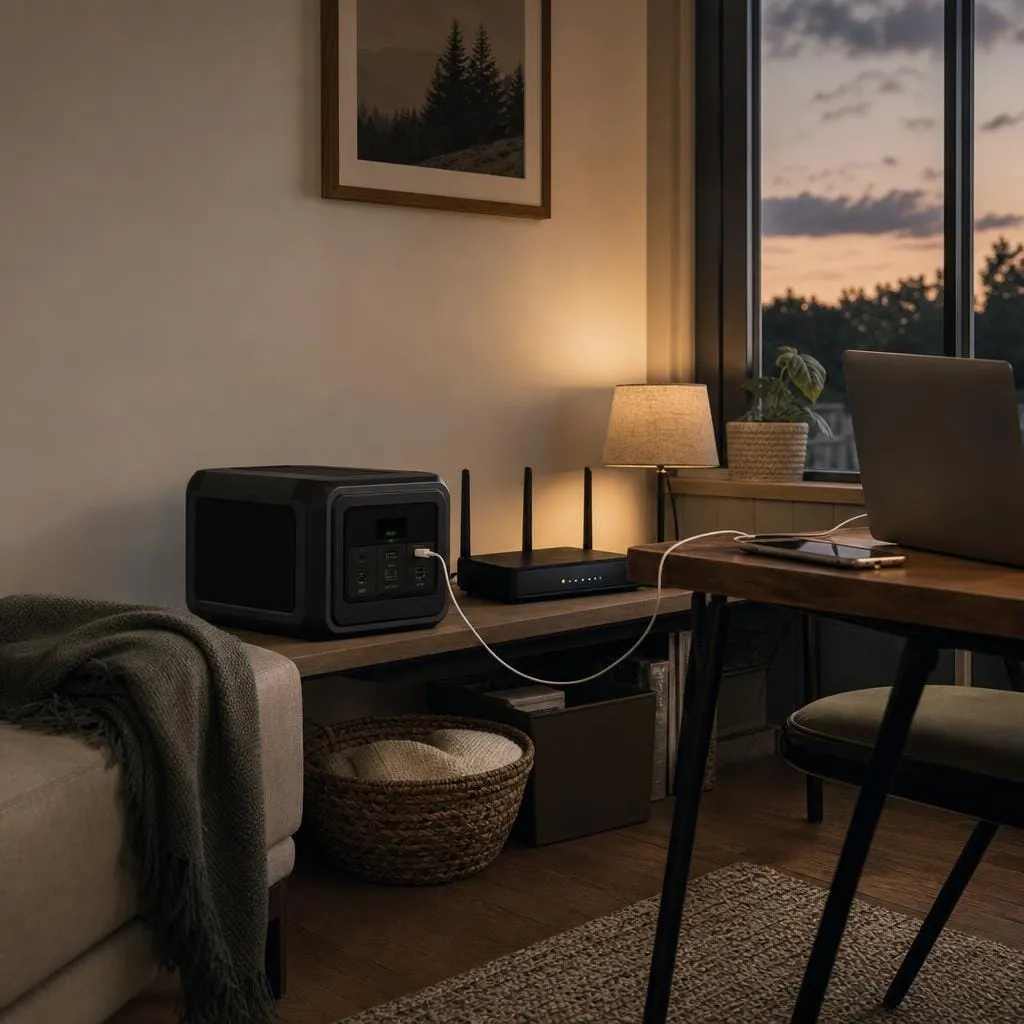
The Explorer 2000 Plus is the battery station underlying Jackery's similarly named solar-generator bundles. The station, panels, and expansion batteries are different parts of a configuration. This analysis focuses on the base unit and on the questions that specifications can help answer.
Two numbers that should not be confused
Jackery's product documentation lists 2,042.8 Wh of base capacity and approximately 27.9 kg of weight. Its US product listing describes 3,000 W of rated output. These are manufacturer figures; regional versions and bundle contents need to be checked separately.
Watts describe power at a moment. Watt-hours describe energy over time. A system can have enough output power to start an appliance while having too little stored energy to run it for the required duration. That distinction is more useful than treating the largest number in an advertisement as a general measure of capability.
Here is an illustrative calculation, not a Jackery runtime test. Suppose a setup could deliver 1,600 Wh of usable energy to its loads. At a constant combined draw of 200 W, the simple estimate is eight hours: 1,600 divided by 200. At 800 W, it is two hours. We selected the 1,600 Wh assumption to demonstrate the calculation; we have not measured this product's usable output energy.
Actual planning needs the relevant operating conditions, conversion losses, idle consumption, changing loads, and a reserve. Appliances that cycle on and off need a meaningful average as well as their starting demand. Equipment labels alone may not describe the full pattern.
Write the backup job down
Before comparing configurations, make a short record:
- Which devices must keep running, and which can wait?
- What is each device's running draw, starting requirement, and needed operating time?
- What recharge source remains available during the event you are planning for?
- Who will move the equipment, and where will it operate and be stored?
- What is the complete cost, including panels, batteries, cables, and any installation?
These questions are our planning framework, not observed product performance. A solar-panel rating also does not promise uninterrupted recharge. The weather, location, and usable hours of sunlight belong in the plan. Our Horsham solar-and-battery explainer examines the same difference between installed hardware and useful power at a much larger scale.
Backup power is not automatically uninterrupted power
The US Explorer 2000 Plus manual, model JE-2000C, describes an emergency-power function with a changeover time and explicitly distinguishes it from a zero-interruption professional UPS. It warns against connecting equipment with high uninterrupted-power requirements, such as data servers and workstations. A large battery is not evidence that a sensitive device will survive a changeover.
The same manual labels this US model for indoor use only and requires appropriate ventilation when charging, a clean and dry environment, and avoidance of damaged equipment. Follow the instructions for the actual regional model and configuration. We have not tested its switchover, protective behavior, fan noise, or compatibility with specific appliances.
Connecting a battery to a building's fixed circuits is a separate installation question. Have a qualified electrician establish the permitted equipment and connection method; this article is not a wiring guide. Do not improvise a connection through a wall outlet.
Fuel generators also need a clear distinction. A battery station does not burn fuel while supplying power. The US Consumer Product Safety Commission says fuel-powered portable generators belong outdoors, at least 20 feet from homes, with exhaust directed away; never inside a home or garage, even with doors or windows open.
What would justify a buying verdict?
We would need a specific configuration tested against a stated job: delivered energy at several loads, actual recharge behavior, noise under identified conditions, and a dated comparison of total cost. Long-term use would add information about reliability that a launch-day specification cannot supply.
Vastkind's assessment is that the 2000 Plus should be evaluated as a complete backup plan. Its nominal capacity is a starting point, not a measured promise of runtime, whole-home suitability, silence, or lowest cost. Our earlier article implied more certainty than its evidence supported; those judgments have been withdrawn.
Editorial correction, 6 September 2026: We removed unsupported performance, silence, safety, and buying claims, distinguished capacity from output, added a labeled calculation, and clarified battery and fuel-generator precautions. We also clarified the historical affiliate disclosure because this revision has no affiliate purchase links. The original publication date and URL have been retained.
Production note: AI systems researched, drafted, and checked this revision. The publisher authorized publication without a separate human fact-check. Vastkind remains responsible for the article.