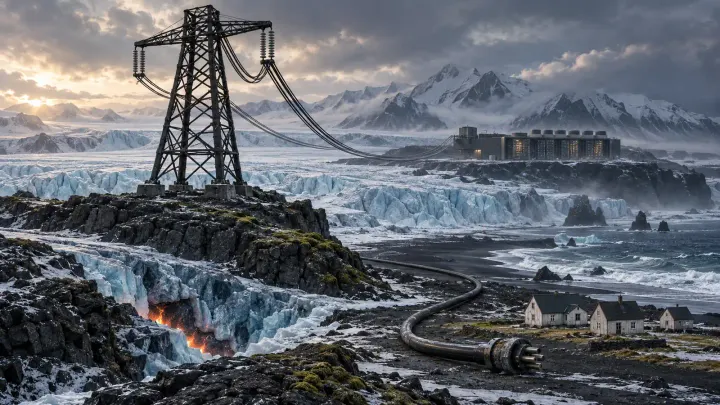

Cheap solar power is no longer a speculative climate promise.
It is a system shock.
That is the right way to understand what has changed.
For years, the argument about solar revolved around whether it could become cheap enough to compete. In many places, that argument is over. The harder question now is what happens when generation gets so cheap that it stops being the main bottleneck.
That is the real solar surge.
The story is no longer just that sunlight is cheap.
It is that cheap sunlight is forcing the rest of the power system to reveal where the actual constraints live: grids, storage, curtailment, flexible demand, manufacturing concentration, land use, and the politics of who captures the value of surplus electricity.
The cost collapse is real, and it matters
Solar’s rise is not just a branding victory for clean energy.
It is an industrial cost story.
Module prices have fallen hard, deployment has scaled fast, and efficiency gains keep pushing the economics further. Once that happens, cheap solar stops being a niche decarbonization tool and becomes something more disruptive: a source of electricity so inexpensive in certain hours and regions that it starts breaking the assumptions of older power systems.
That matters because cost changes behavior.
Utilities plan differently. Industrial users think differently about load timing. Countries start rethinking energy security. Manufacturers begin fighting over who will own the production base of the cheapest power technology on earth.
This is also why perovskite-silicon tandem progress matters. It is not just a lab-story about higher efficiency. It is a way of changing the land, material, and rooftop economics of solar deployment at scale. For that specific materials angle, see Flexible Solar Cells: How Japan's Perovskite-Silicon Tandems Could Transform Buildings and Mobility.
Once solar gets cheap enough, the bottleneck moves to the system
This is the part naive solar triumphalism keeps missing.
Cheap generation does not automatically create usable abundance.
It creates pressure on the rest of the system.
If the grid cannot move the power, if storage cannot absorb the surplus, if industrial loads cannot flex, and if price structures collapse under too much noon-time supply, then extremely cheap solar creates a paradox: more energy potential, but more revenue stress and more integration pain.
That is why negative pricing matters. It is not just a strange market curiosity. It is a signal that power is abundant in one slice of time and scarce in another, and that the system around the panels is not yet built to turn that abundance into durable value.
Curtailment, storage oversubscription, transmission delays, and fragile merchant revenues are not side issues.
They are the new center of the story.
The hard problem is no longer primarily how to produce cheap electrons.
It is how to absorb them intelligently.
Cheap noon-time power can reorder industry — if the load can move
This is where the upside gets more interesting.
When electricity becomes extremely cheap during specific hours, the question stops being “how do we decarbonize power?” and becomes “which parts of the economy can reorganize around cheap power when it is available?”
That is a much larger systems question.
Data centers, hydrogen production, desalination, heat pumps, thermal storage, flexible manufacturing, and other power-hungry processes suddenly start looking different if they can chase midday surplus rather than demand constant premium electricity. The same logic affects agriculture, district heating, and regional industrial strategy.
This is the more serious version of the abundance story.
Not infinite free energy.
Time-sensitive cheap energy that rewards flexibility.
That distinction matters. The future does not belong simply to the places that install the most panels. It belongs to the places that can coordinate grids, storage, software, and industrial demand around cheap solar windows.
The geopolitical and ecological risks do not disappear just because the power is clean
Another weak frame says that once solar is cheap, the hard part is solved.
No.
Cheap solar can still create brittle dependencies.
Manufacturing concentration matters. If too much of the supply chain condenses into too few firms or countries, then the world swaps one energy dependency structure for another.
Waste matters too. A power source deployed at massive scale eventually becomes a materials and recycling problem at massive scale.
And market design matters. If the economics of merchant solar erode too far without storage, transmission reform, or better pricing structures, the very abundance that looks like victory can start undermining the financing of the next buildout wave.
This is why cheap solar should not be romanticized as automatic democratization.
It is a power shift, but power shifts still need governance.
The real winners will be system integrators, not just panel installers
The old solar story was about cost parity.
The new solar story is about orchestration.
Who can integrate generation with storage? Who can build transmission fast enough? Who can shift industrial load to the right hours? Who can build recycling loops before waste becomes political? Who can protect against supply-chain monoculture? Who can turn cheap noon-time power into durable public and industrial value?
That is the real contest now.
And it is why cheap solar power is no longer only a clean-tech story.
It is an infrastructure-governance story.
Why This Matters
Cheap solar matters because it changes what the energy transition is bottlenecked by. Once generation becomes very cheap, value shifts toward storage, transmission, flexible demand, and system design. That creates huge upside, but only for places able to absorb and direct surplus electricity intelligently. The real question is no longer whether sunlight can be cheap. It is who can turn cheap sunlight into durable power, industry, and public benefit.
Conclusion
The solar surge is real.
But the mature way to read it is not as a simple triumph of cheap clean power.
It is as a shift in where the difficulty lives.
The next phase of the energy transition will be decided less by whether we can generate cheap electrons and more by whether we can move them, store them, schedule around them, and govern the infrastructure that gives them value.
That is why cheap solar changes everything only if the grid can keep up.
Otherwise abundance stays stranded.
CTA: Read next: AI Data Center Power: Fusion, Geothermal, SMRs—Who Wins the Race? and Enhanced Geothermal Systems: 500 MW of firm power for AI