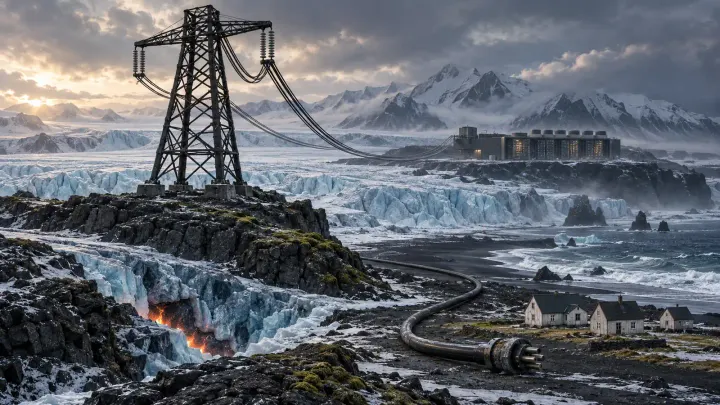
The AI energy story is starting to split into two camps.
One camp is theatrical: fusion headlines, moonshot reactors, speculative abundance.
The other is much more operational. It asks a simpler question: what can actually deliver large amounts of clean, reliable electricity on the timelines AI infrastructure now demands?
Enhanced geothermal systems belong in the second camp.
That is why this topic matters more than it first appears. The strongest case for next-generation geothermal is not that it sounds futuristic. It is that it may solve one of the ugliest constraints in the AI buildout: the need for power that is clean, local enough to matter, and available around the clock rather than only when weather cooperates.
Why geothermal is suddenly relevant to AI
AI data centers do not just need energy in the abstract. They need dependable power, at scale, with financing logic that can survive real infrastructure timelines.
That is where enhanced geothermal systems, or EGS, become interesting.
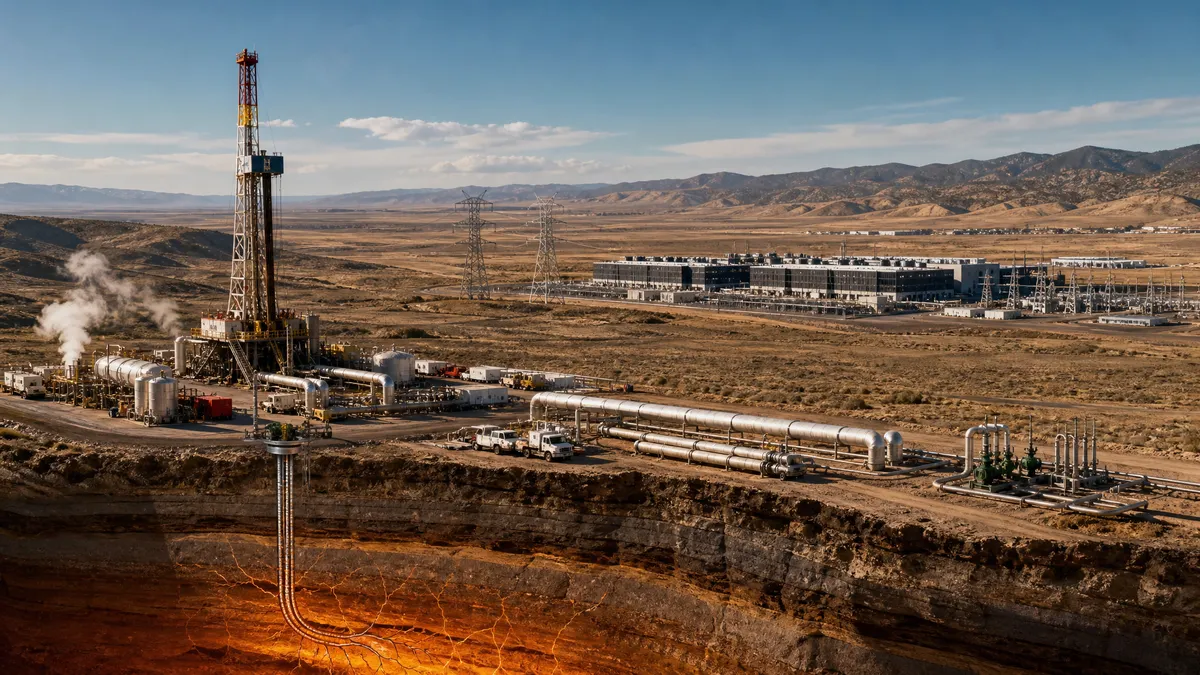
Unlike conventional geothermal, which depends on naturally permeable underground resources, EGS uses drilling, reservoir engineering, and oil-and-gas-style completion techniques to make hot rock commercially useful even where nature did not provide the ideal conditions on its own.
That changes the strategic picture. Instead of treating geothermal as a niche resource limited to a handful of lucky locations, EGS reframes it as a potentially repeatable clean-firm-power platform.
For AI infrastructure, that matters a lot. A hyperscale campus cannot run on narrative. It runs on electrons.
For the broader backdrop, see AI Data Center Power: Fusion, Geothermal, and SMRs in the Race to Run AI.
Cape Station is the part that makes this feel real
The clearest commercial proof point right now is Fervo Energy’s Cape Station project in Utah.
According to Fervo, Cape Station Phase I is expected to deliver 100 megawatts of baseload clean power beginning in 2026, with an additional 400 megawatts planned by 2028. The company has also said the broader development area has permitting approval to expand up to 2 gigawatts.
That is why Cape Station matters. It is not just a technology demonstration. It is a test of whether EGS can make the jump from clever engineering story to repeatable infrastructure class.
Fervo’s June 2025 financing announcement made the signal even clearer. The company disclosed $206 million in additional capital for Cape Station development and framed the milestone explicitly as evidence that EGS is becoming a bankable clean-energy solution rather than a perpetual future-tense promise.
That shift from technical promise to financeability is the real hinge.
Lots of energy ideas sound good. Far fewer survive lenders, offtake expectations, project schedules, and utility-grade scrutiny.
The value proposition is not just “clean”
The usual mistake is to treat geothermal as one more renewable in a generic clean-energy list.
That misses the point.
The real appeal of EGS in the AI era is that it targets a combination that is unusually hard to get at once:
- low-carbon power
- firm output
- grid relevance on real industrial timelines
- less dependence on fuel delivery
- potential siting flexibility beyond classic hydrothermal hotspots
That is why it fits the current moment better than a lot of shinier narratives. AI load growth is forcing a harder conversation about what kind of power system can actually support compute expansion without turning every decarbonization target into a joke.
Wind and solar matter. But they do not remove the need for firm generation, storage, transmission, and balancing. EGS enters the picture as one of the few clean-energy pathways trying to attack the firm-power part directly.
Why this is bigger than one project
The long-term story is not Cape Station alone.
The bigger story is resource scale if the engineering model keeps improving.
In 2025, the USGS said enhanced geothermal systems in the Great Basin could supply roughly 10% of current U.S. electricity demand under sufficient technological progress and commercial deployment. That does not mean the resource is automatically bankable tomorrow. It does mean the ceiling is high enough to matter nationally.
That is the difference between niche and strategy.
The U.S. Department of Energy has also treated next-generation geothermal as a serious commercialization pathway rather than an academic side quest. DOE’s broader Liftoff work around geothermal reinforces the same point: this is now being framed as a practical industrial scale-up problem, not just a science problem.
Once institutions start treating a technology as a deployment question instead of a laboratory question, the whole conversation changes.
Why AI companies should care specifically
AI companies are heading into an era where power access becomes a competitive variable.
Not a background variable. A real one.
If compute demand keeps climbing, then the companies best positioned to secure durable electricity supply will enjoy strategic advantages in siting, cost control, and buildout speed. That is one reason the AI race is increasingly colliding with the energy and utility world.
EGS is attractive in that context because it promises something data-center planners actually understand: stable capacity.
That does not mean geothermal replaces every other energy source. It means it could become part of a serious portfolio for powering data centers that cannot afford to treat intermittency as someone else’s problem.
There is also a second-order advantage here. Geothermal sits much closer to an infrastructure mentality than to a speculation mentality. That makes it easier to integrate into utility planning, long-term offtake structures, and industrial procurement logic.
In other words: it looks like something adults can sign contracts around.
The hard part is not the concept anymore
The concept of EGS is not the hard part now.
The hard part is execution at industrial rhythm.
That includes:
- drilling performance
- reservoir durability
- cost control
- permitting speed
- supply-chain discipline
- repeated project delivery rather than one heroic build
This is where the oil-and-gas crossover matters. EGS is drawing from a skills and tooling base that already exists: directional drilling, subsurface engineering, reservoir management, completion logic. That does not eliminate risk, but it does make the commercialization path more believable than if the sector needed an entirely new industrial base from scratch.
The real test is whether EGS can become boring.
That may sound insulting. It is not.
Infrastructure wins when it stops feeling miraculous and starts feeling repeatable.
The risk is over-romanticizing it too early
This is where I would push back against lazy optimism.
EGS is promising, but not magically solved.
There are still real issues around induced seismicity, water management, well performance, project economics, and pace of replication. A few good projects do not automatically mean a national rollout is easy.
There is also a familiar trap in energy coverage: confusing resource potential with deployable capacity. Those are not the same thing.
A big theoretical resource only matters if the drilling, financing, regulatory, and grid-integration stack can convert it into dependable generation at acceptable cost.
So no, this is not the moment to pretend geothermal has already won.
But it is the moment to admit it has moved out of the “interesting but distant” bucket.
Why This Matters
Enhanced geothermal systems matter because AI is forcing the energy system into a more honest phase. It is no longer enough to talk abstractly about clean power. The question is who can deliver reliable electricity fast enough to support compute growth without locking in another wave of fossil dependence. EGS is compelling because it targets the difficult middle: not just low-carbon energy, but firm low-carbon energy that can be financed, contracted, and scaled. If that works, geothermal stops being a niche story and becomes part of the industrial backbone of the AI era.
Conclusion
The strongest argument for enhanced geothermal systems is not that they are exciting.
It is that they are useful.
AI is pushing energy demand toward a harder reality where dependable power matters more than elegant slogans. In that environment, next-generation geothermal starts to look less like an exotic climate technology and more like one of the few credible tools for building clean firm capacity on time.
That is the frame that matters.
If Cape Station performs, the significance will not be that one company proved a point in Utah. It will be that geothermal crossed a threshold from promising category to repeatable infrastructure.
And in the AI era, that may be exactly what gives it leverage.
CTA: Read next: AI Data Center Power: Fusion, Geothermal, and SMRs in the Race to Run AI
Read next: For the broader compute-energy map, see Vastkind's Compute hub, why hot rock is becoming compute infrastructure, and why grid hardware may matter as much as generation.